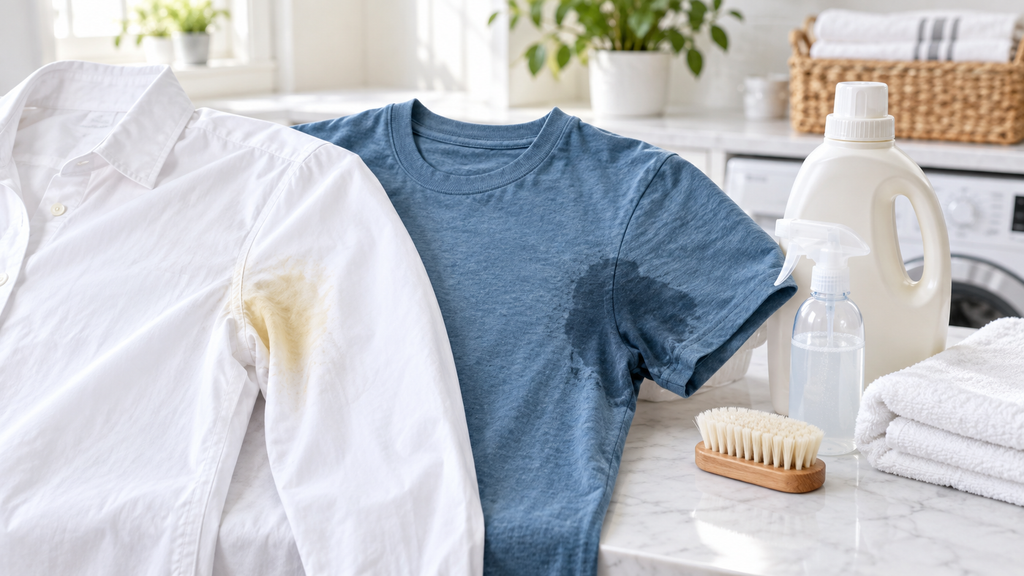
Sweat stains are easier to treat when you match the cleaning method to the garment rather than reaching immediately for the strongest cleaner.
For most washable clothes, start by checking the care label. Pretreat the stained area with liquid laundry detergent or a stain remover that is suitable for the fabric, allow it to work according to its directions, and then wash the garment at the warmest temperature its care label allows. Inspect the stain before using the dryer. If it remains, retreat the garment and air-dry it instead.
Older yellow underarm stains, colored fabrics, activewear, hats and delicate garments may need a different approach.
How to Remove Sweat Stains From Clothes
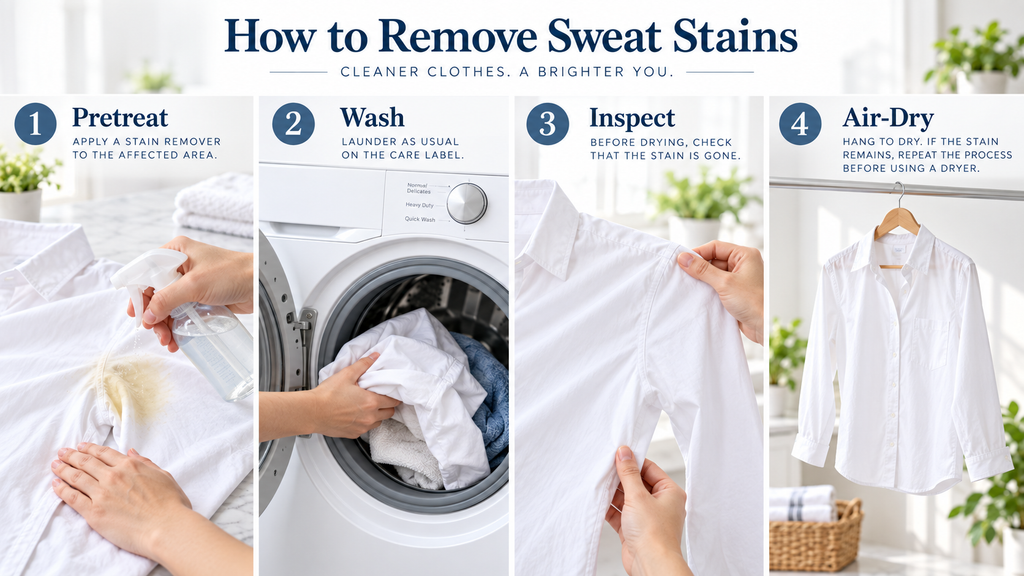
For a typical washable shirt:
- Check the care label. Confirm that the garment can be washed and note its temperature, bleach and drying restrictions.
- Test when necessary. If you are using a stain remover, oxygen bleach, peroxide or another treatment that could affect dye, test it on a hidden area first.
- Pretreat the stain. Work a small amount of compatible liquid laundry detergent, enzyme pretreatment or stain remover into the affected area.
- Give the treatment time to work. Use the contact time on the product label rather than assuming every stain remover requires the same soak.
- Wash the garment. Use the warmest water that is safe according to the garment and laundry-product instructions.
- Inspect before drying. Check the underarm, collar or other affected area while the garment is out of the dryer.
- Repeat if necessary. Persistent stains may need another pretreatment cycle or, where appropriate, fabric-safe oxygen bleach.
The American Cleaning Institute similarly recommends pretreatment followed by laundering in the hottest water safe for the fabric and notes that enzymes or oxygen bleach may help with stubborn perspiration stains.
Important: Avoid machine drying while a visible stain remains when practical. Dryer heat can make residual staining harder to remove.
First, Identify What Kind of Mark You Have
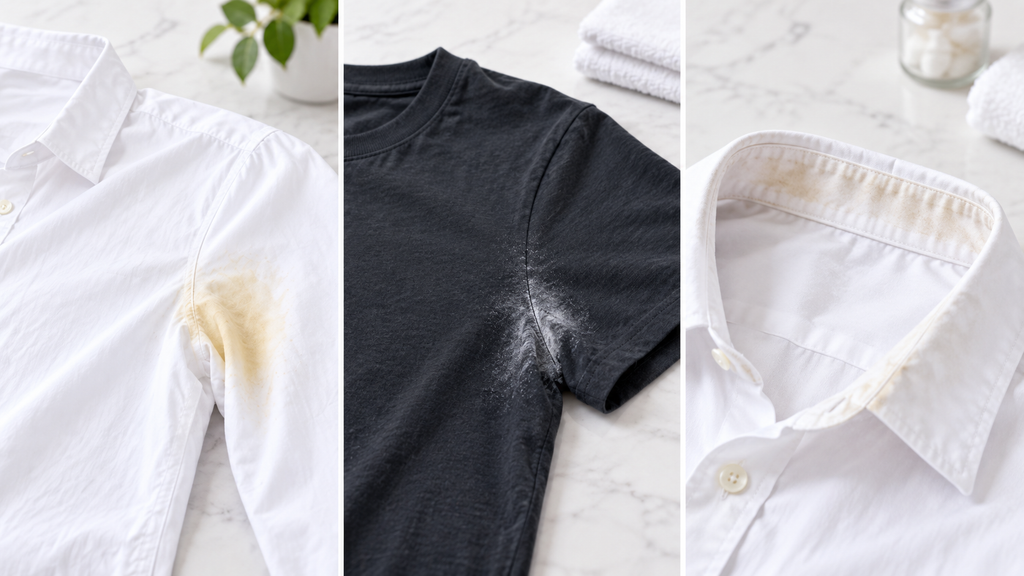
Not every mark in the underarm area is the same problem.
| What you see | Possible issue | Good starting point |
|---|---|---|
| Fresh damp mark | Recent perspiration | Prompt washing/pretreatment |
| Yellow underarms | Mixed perspiration, body soil and product buildup | Enzyme pretreatment |
| White/chalky mark | Deodorant or antiperspirant transfer | Gentle residue removal |
| Stiff underarm area | Repeated product/body-soil buildup | Pretreat and wash |
| Odor but little discoloration | Retained body soils/odor compounds | Detergent or odor-focused wash |
| Old yellow/brown patch | Aged, oxidized buildup | Repeated treatment |
Appearance alone cannot tell you the exact chemical composition of a stain, so use it as a treatment clue rather than a diagnosis.
Why Sweat Stains Turn Yellow or Feel Stiff
Human sweat is mostly water and electrolytes, but the material that reaches a shirt can also include skin residue, sebum, minor sweat constituents and secretions from glands in the underarm area. Deodorant and antiperspirant add another layer of material.
Repeated wearing, incomplete removal and oxidation can therefore leave a stain that is more complicated than sweat alone.
Antiperspirant ingredients containing aluminum compounds may contribute to difficult underarm deposits, but it is inaccurate to claim that every yellow stain is simply a direct “sweat plus aluminum” reaction. Fabric type, body soils, personal-care products, laundering and the age of the stain all matter.
How to Treat Fresh Sweat Stains
Fresh stains generally give you a simpler starting point.
Check the care label, pretreat the affected area with suitable liquid detergent or an enzyme-containing pretreatment, allow it to work as directed and wash the garment.
There is no need to insist on cold water for every sweat stain. Use the temperature permitted by the garment and cleaning-product instructions. The American Cleaning Institute recommends the hottest water safe for the fabric after pretreatment.
When the wash finishes, inspect the fabric before drying.
How to Remove Old Sweat Stains
Older stains often need patience rather than aggressive scrubbing.
Begin with an enzyme-containing detergent or stain pretreatment. If the garment is washable and the stain remains, a fabric-safe oxygen bleach may be appropriate. Follow its label for concentration, water temperature and soaking time.
You may need more than one treatment cycle.
Do not promise complete restoration of every old stain. Perspiration can weaken textile fibers over time, and aged stains may also involve permanent discoloration or changes to dye. University of Georgia textile guidance specifically notes that perspiration stains can weaken fibers.
How to Remove Yellow Sweat Stains From White Shirts
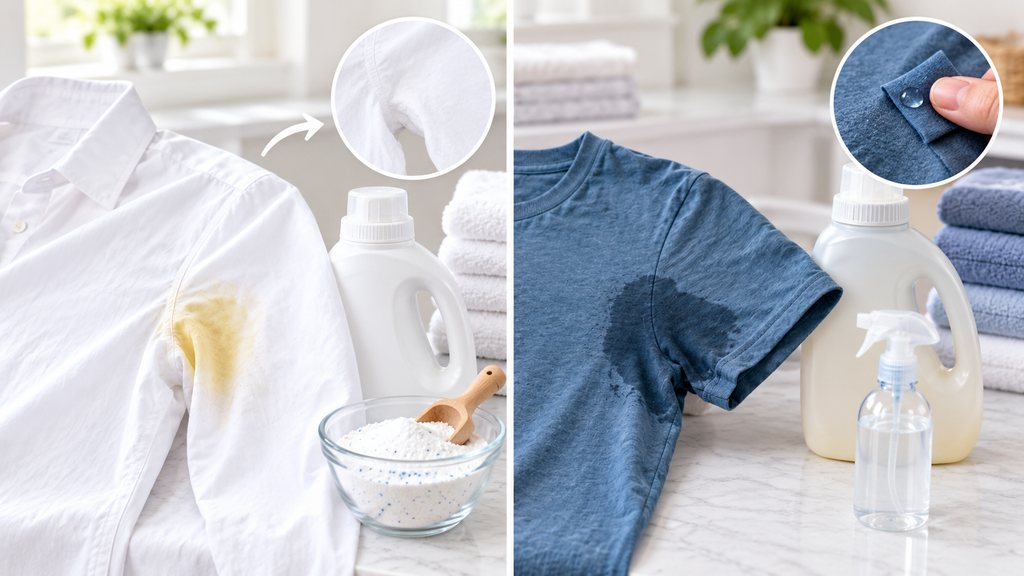
White shirts allow more treatment options than many colored garments, but “white” does not automatically mean “safe for every bleach.”
Start with detergent or enzyme pretreatment and launder according to the care label.
If yellowing remains, consider an oxygen-based laundry bleach or whitener specifically permitted for that fabric. Follow the product label rather than borrowing another brand’s soak time or concentration.
Check again before drying and repeat if necessary.
A white garment may contain elastane, colored stitching, prints, logos or specialty finishes, all of which can limit bleaching options.
What About Chlorine Bleach?
Chlorine bleach and oxygen bleach are different products.
Laundry guidance is not completely uniform here. Good Housekeeping suggests chlorine bleach for especially stubborn marks on bleach-safe white clothing, while Whirlpool cautions that chlorine bleach can darken the appearance of some sweat staining and recommends oxygen bleach instead.
For a general consumer guide, the more conservative escalation is:
pretreat → wash → oxygen bleach if fabric-safe
Use chlorine bleach only when the garment care instructions and bleach-product label explicitly permit it.
How to Remove Sweat Stains From Colored Clothes
Colored garments require more attention to dye stability.
Check the care label and patch-test unfamiliar stain treatments. Start with liquid detergent, an enzyme pretreatment or another color-safe stain remover.
If additional whitening or stain lifting is needed, use only an oxygen bleach that is labeled appropriate for colors and for the garment in question.
Hydrogen peroxide, chlorine bleach and even some household acids or alkalis can affect dyes. Do not assume that a method is color-safe simply because it worked on a white cotton shirt.
How to Remove White Deodorant Marks From Dark Clothes
A fresh white deodorant streak is often a surface-transfer problem rather than a deeply embedded sweat stain.
First try gently lifting or wiping away the residue with a clean, soft cloth or by carefully rubbing the fabric against itself if its construction allows.
Avoid forceful scrubbing, which can abrade the fibers or leave a shiny patch.
If the underarm area instead feels stiff or looks built up after repeated wear, treat it as residue buildup: pretreat with suitable detergent or stain remover, then wash according to the care label.
What About Cotton?
Cotton usually tolerates ordinary laundering better than many delicate fibers, but it is not indestructible.
Dyed cotton can fade or bleed. Printed cotton can lose color. Excessive heat can shrink some garments, and inappropriate bleaching can weaken fibers or alter appearance.
Follow the permanent care label even when a shirt is 100% cotton.
How to Treat Sweat Stains on Polyester and Workout Clothes
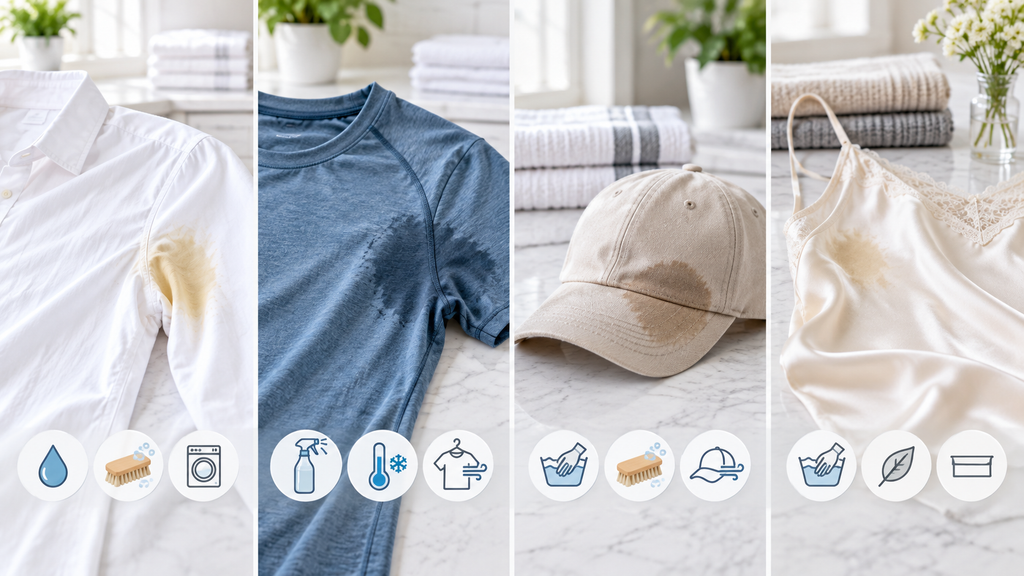
Synthetic performance clothing deserves its own approach because odor and body soils can behave differently on polyester than on cotton. Research comparing worn polyester and cotton shirts found stronger and less pleasant odor development in polyester under the studied conditions.
Turn the garment inside out if that exposes the sweat-heavy area more directly.
Pretreat the underarms, collar or other high-contact areas with a cleaner permitted by the garment manufacturer, then wash within the label’s temperature limits.
Avoid unnecessary high heat and rough scrubbing.
Do not automatically add fabric softener to performance clothing. Some manufacturers warn that softeners and certain residues can interfere with moisture-wicking treatments; follow the instructions for the particular garment.
What About Delicate or Dry-Clean-Only Clothes?
Silk, wool, leather, structured garments and dry-clean-only pieces are poor candidates for generic internet stain-removal recipes.
Perspiration can weaken silk, and chlorine bleach is unsuitable for it. University of Georgia textile guidance recommends following the permanent care label and notes that professional dry cleaning is often preferable for silk stain removal because home treatment can remove color.
For expensive, delicate or dry-clean-only garments, take the item to a professional cleaner and point out exactly where the perspiration or deodorant staining is located.
How to Remove Sweat Stains From Hats
Before wetting a hat, check how it is constructed.
A washable cotton or polyester cap may tolerate a treatment that a wool hat, structured brim, vintage cap or heavily embroidered design cannot.
Check the manufacturer’s care instructions first. Spot treatment may be safer than complete soaking if the brim, adhesive, shape or dye is vulnerable.
Even OxiClean’s hat guidance tells consumers to read the hat’s label before treatment.
How to Remove Sweat and Body-Oil Stains From Collars
Collar stains can include perspiration, skin oils and hair or skin-care residues, so they should not automatically be treated as chemically identical to yellow underarm stains.
Apply suitable liquid detergent or stain pretreatment directly to the collar, work it in gently and wash according to the garment label.
Repeated collar buildup may require more than one treatment.
How to Get Sweat Odor Out of Clothes
Removing odor and removing discoloration are related tasks, but they are not identical.
Wash sweat-heavy garments promptly, pretreat the areas that contact the body most, and use a suitable detergent or enzyme/odor-focused laundry product when needed.
Avoid leaving damp gym clothing closed inside a bag for long periods.
After cleaning, allow garments to dry completely.
Synthetic fabrics are especially worth treating promptly because textile composition can influence odor development.
Are DIY Sweat-Stain Remedies Worth Using?
Laundry advice online contains long lists of vinegar, baking soda, peroxide, lemon juice, salt, ammonia and other household products.
You do not need most of them.
Start with a laundry detergent or compatible stain pretreatment. Those products are designed for clothing and simplify dosing and safety.
White Vinegar
The American Cleaning Institute includes white vinegar as an option when old perspiration has altered fabric color.
It is still not a universal solution. Check colorfastness and the garment label.
Never combine vinegar with chlorine bleach. Acidifying hypochlorite bleach can release chlorine gas.
Hydrogen Peroxide
Three-percent hydrogen peroxide appears in textile stain-removal guidance and acts as a bleaching agent, but dyed fabrics should be tested for colorfastness.
For a consumer sweat-stain guide, reserve it for situations where the fabric and color can tolerate it, patch-test first and avoid stronger peroxide concentrations or uncontrolled chemical mixtures.
Baking Soda
Baking soda may be used as an optional cleaning or mild abrasive aid on compatible sturdy fabrics, but it is not necessary for most sweat stains.
There is no reason to claim that baking soda “neutralizes all sweat acids” or scientifically dissolves every yellow stain.
A detergent or properly labeled stain remover is a simpler first choice.
Critical Chemical-Safety Rule
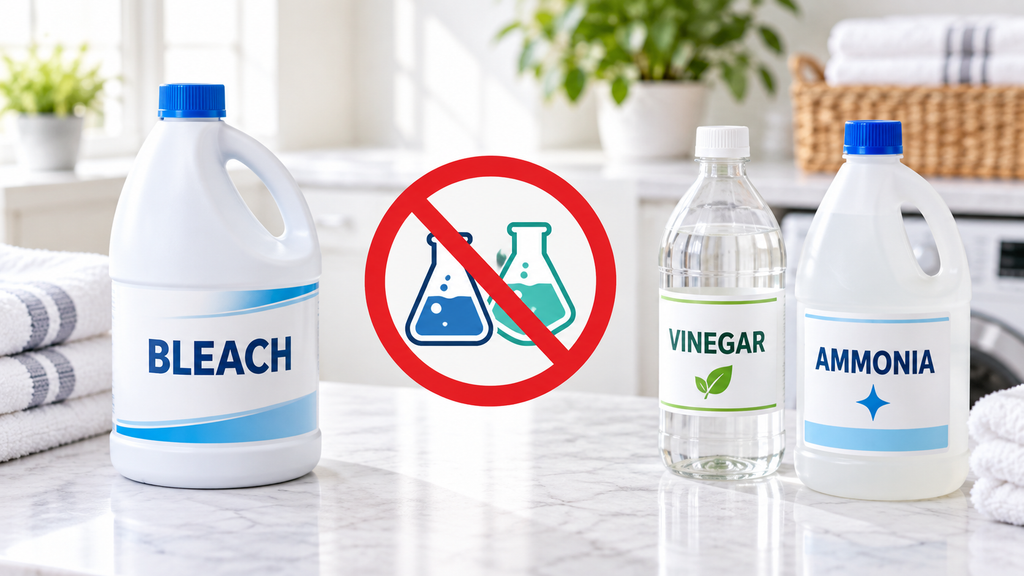
Do not create laundry-cleaning cocktails.
CDC advises never mixing household bleach with other cleaners or disinfectants. Poison Control specifically warns against combining bleach with acids such as vinegar or with ammonia.
Use one treatment at a time.
If you decide to switch methods, rinse the garment thoroughly first and follow the next product’s label.
Why Didn’t the Washing Machine Remove the Stain?
A normal wash may leave staining behind when the garment contains repeated underarm buildup, antiperspirant residue, body oils, aged oxidation or a stain that needed pretreatment before laundering.
The detergent or wash temperature may also have been unsuitable for the particular fabric.
That does not mean ordinary detergent is incapable of removing perspiration. Fresh body soils often respond far more easily than months of accumulated residue.
Common Sweat-Stain Removal Mistakes
Avoid these common problems:
- Machine-drying before checking whether the stain remains.
- Ignoring the care label.
- Assuming every white fabric is chlorine-bleach safe.
- Treating silk, wool and polyester exactly like cotton.
- Aggressively scrubbing delicate or dark fabric.
- Mixing bleach with vinegar, ammonia or other cleaners.
- Copying a commercial product’s soak time onto a different product.
- Leaving sweaty workout clothes sealed in a bag.
- Using viral laundry hacks without checking whether they are suitable for the fabric.
Internet suggestions involving aspirin, toothpaste, meat tenderizer, vodka, dishwasher detergent and other improvised treatments offer little reason to replace established laundry pretreatments for an ordinary sweat stain.
How to Prevent Sweat Stains From Building Up
Wash sweat-heavy clothing before heavy residue accumulates.
Let deodorant or antiperspirant dry before dressing when possible, and avoid applying more product than you need.
An undershirt or garment shield can protect clothing where practical.
Air out damp workout clothes rather than leaving them compressed inside a bag.
If the same shirts repeatedly discolor in the underarms, begin pretreating those areas before the buildup becomes severe.
You do not need to stop using antiperspirant as a universal stain-prevention measure. Alternative deodorants can also contain oils, waxes or other ingredients capable of leaving residue.
A Note About Excessive Sweating
This is primarily a laundry problem, not a medical diagnosis.
However, if sweating becomes unusually heavy, newly develops, persists without a clear reason, occurs repeatedly at night or significantly disrupts daily life, a healthcare professional can help determine whether further evaluation is appropriate.
Bottom Line
The safest way to remove most sweat stains is not a complicated homemade formula.
Start with the garment’s care label, pretreat the affected area, wash with an appropriate detergent at a fabric-safe temperature and inspect before using the dryer.
Escalate stubborn stains gradually with enzyme products or fabric-safe oxygen bleach where appropriate. Treat colored clothing, activewear, hats and delicate fibers according to their own limitations—and never mix household cleaning chemicals in an attempt to make a stronger stain remover.
FAQs:
How do you remove old sweat stains?
Pretreat with an enzyme-containing laundry product, wash according to the care label and, if appropriate, use fabric-safe oxygen bleach. Repeat the treatment rather than immediately escalating to harsh chemicals.
How do you get yellow armpit stains out of white shirts?
Start with detergent or enzyme pretreatment. Wash, inspect, then consider oxygen bleach if the fabric permits it. Do not assume all white garments tolerate chlorine bleach.
Does vinegar remove sweat stains?
White vinegar appears in established laundry guidance for some older perspiration-related discoloration, but it is optional rather than essential. Never combine it with chlorine bleach.
Does baking soda remove sweat stains?
It may help as an optional cleaning aid on suitable sturdy fabrics, but a laundry detergent or stain pretreatment is a more standardized first-line method.
Does hydrogen peroxide remove sweat stains?
Three-percent hydrogen peroxide can act as a textile bleaching/stain-removal agent, but it may affect dyes. Patch-test and avoid casual use on delicate or colored fabrics.
Can you use bleach on sweat stains?
It depends on which bleach and which garment. Oxygen bleach is often the more conservative option. Chlorine bleach should be used only when the garment and bleach labels permit it.
Why do sweat stains turn yellow?
Underarm yellowing can reflect a mixture of perspiration, body oils, skin material, personal-care residues and changes that occur during repeated wear and aging. It should not be reduced to one universal chemical reaction.
How do you remove deodorant buildup?
Fresh white transfer may wipe away gently. Deeper, stiff residue generally needs detergent/stain pretreatment followed by laundering.
How do you remove sweat stains from black clothes?
Start gently. Remove loose deodorant residue without aggressive rubbing. For embedded buildup, use a color-safe detergent or pretreatment and patch-test unfamiliar treatments.
How do you remove sweat stains from polyester?
Pretreat affected areas and wash within the garment’s temperature limits. Avoid unnecessary heat and check the manufacturer’s guidance before using softeners or strong stain removers.
Can sweat stains become permanent?
Some old staining may not fully reverse if dye or fiber damage has occurred. Repeated treatment can improve many stains, but complete removal should not be guaranteed.