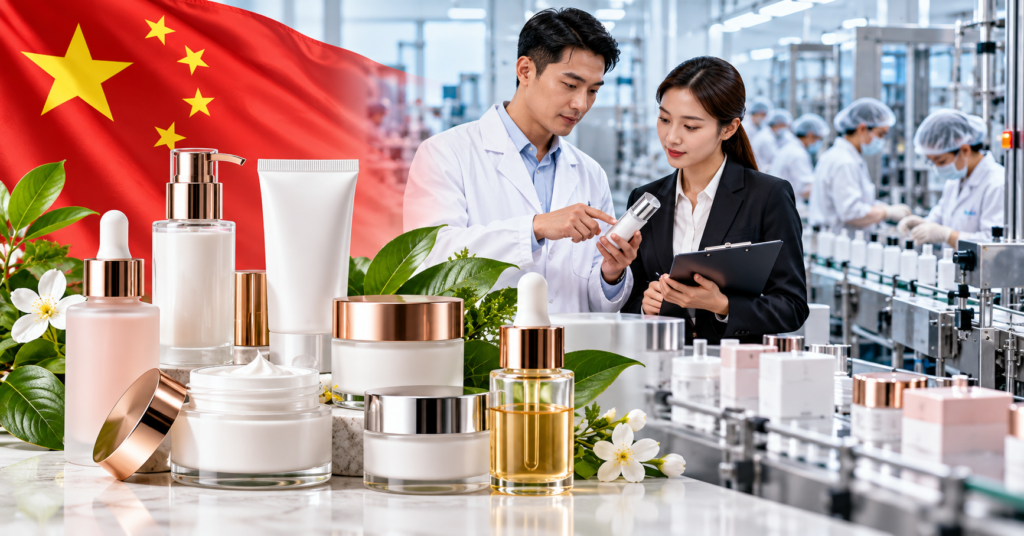
Launching a skincare brand involves much more than designing an attractive logo and choosing a product name. One of the most important decisions is selecting the right manufacturing partner. The manufacturer influences product quality, formulation options, packaging, production capacity, consistency, and ultimately how customers experience the brand.
China has become an important manufacturing destination for beauty and personal care companies because of its large production infrastructure and access to formulation, packaging, and private-label services. However, choosing a skincare manufacturer should never be based on price alone.
Beauty brands need to evaluate a potential manufacturing partner carefully before moving into full-scale production.
Understand Your Product Requirements First
Before contacting manufacturers, a brand should have a clear idea of the products it wants to create.
Some businesses may want relatively simple products such as facial cleansers, moisturizers, body lotions, or serums. Others may require specialized formulations, specific textures, fragrances, packaging formats, or ingredient preferences.
Creating a basic product brief helps manufacturers understand the project and provide more accurate information.
A useful brief may include:
- Product type
- Desired texture and appearance
- Preferred ingredients
- Ingredients to avoid
- Packaging requirements
- Estimated order quantity
- Target market
- Desired positioning and price range
Having these details prepared can make conversations with manufacturers considerably more productive.
Private Label vs. Custom Formulation
One of the first choices a skincare company must make is whether to use private-label products or develop a customized formulation.
Private-label manufacturing normally involves selecting an existing formulation offered by the manufacturer and branding it with the buyer’s own packaging and identity. This approach may be attractive to newer brands because development can be relatively straightforward.
Custom formulation gives a beauty company greater control over the product itself. The manufacturer may work with the client to adjust ingredients, texture, fragrance, appearance, or other characteristics.
Neither model is automatically better.
The right choice depends on the brand’s budget, product strategy, desired differentiation, development timeline, and production requirements.
Evaluate the Manufacturer’s Capabilities
Skincare manufacturing involves several stages, and brands should understand which services a potential supplier can handle internally.
For example, some manufacturers may focus mainly on production, while others may provide broader OEM or ODM services covering product development, samples, packaging, and manufacturing.
Companies researching potential suppliers can compare experienced China skincare manufacturers to better understand the types of manufacturing capabilities and services available within the market.
A suitable manufacturing partner may be able to support multiple parts of the process, including formulation development, sampling, packaging coordination, scalable production, and quality-control procedures.
The more clearly these capabilities are defined at the beginning, the easier it becomes to avoid misunderstandings later.
Always Request Product Samples
Samples are one of the most important parts of the supplier evaluation process.
A formulation may sound excellent in a product specification, but physical testing gives the brand a much clearer idea of the actual product.
When reviewing skincare samples, businesses should consider factors such as:
- Texture
- Absorption
- Scent
- Appearance
- Packaging compatibility
- Overall user experience
Brands developing custom products may go through several rounds of sampling before approving a final version.
This stage should not be rushed. Minor changes before production can be much easier and less expensive than dealing with an unsuitable finished batch.
Ask About Quality Control
Quality consistency matters greatly in skincare manufacturing.
A brand does not simply need one good sample. It needs the manufacturer to produce products consistently when larger orders are placed.
Businesses should therefore ask manufacturers how they manage quality throughout the production process.
Relevant questions may include how raw materials are handled, how production batches are monitored, what inspections are carried out, and what documentation is available for the products being manufactured.
Requirements can also differ depending on the market where the finished skincare products will eventually be sold.
Brands should independently determine which product, labeling, ingredient, testing, and regulatory requirements apply in their target countries rather than assuming that manufacturing alone guarantees market compliance.
Review Packaging Options Carefully
Packaging plays both a practical and marketing role.
It protects the formulation while also influencing how customers perceive the product. Pumps, tubes, jars, bottles, droppers, cartons, labels, and printed finishes can all contribute to the final presentation.
Before approving packaging, brands should consider:
- Compatibility with the formulation
- Ease of use
- Leakage protection
- Shipping durability
- Labeling space
- Visual appearance
- Cost at different quantities
Brands planning to expand should also consider whether the packaging option can remain available when production volumes increase.
Changing packaging frequently can create unnecessary operational complications and weaken consistency across a product line.
Understand Minimum Order Quantities
Minimum order quantity, commonly called MOQ, can have a major impact on a new beauty business.
Ordering a very large quantity may reduce the cost per unit, but it also increases inventory risk and ties up more capital.
Smaller initial quantities may be more practical when testing a new product or entering an unfamiliar market.
When discussing MOQ with a manufacturer, brands should ask whether requirements differ according to the formulation, packaging, customization level, or printing method.
Understanding these details helps businesses estimate the actual investment required instead of looking only at the quoted unit price.
Consider Scalability
A manufacturing partner should not only meet the brand’s current requirements. Ideally, it should also be capable of supporting future growth.
A startup may initially need a relatively small production run, but successful products can create demand quickly.
Brands should therefore discuss production capacity, typical lead times, repeat-order processes, and how larger orders are handled.
A manufacturer that supports both product development and scalable production can reduce the need to change suppliers as the business expands.
Compare Total Value, Not Just Price
Choosing the cheapest quote may appear attractive, especially for a new brand trying to protect its margins.
However, manufacturing cost should be considered alongside other factors.
Businesses should evaluate:
- Product quality
- Formulation support
- Communication
- Sampling process
- Packaging assistance
- Quality-control procedures
- Production capabilities
- Lead times
- Scalability
A slightly higher manufacturing cost may be worthwhile if the supplier provides stronger quality consistency, clearer communication, and better production support.
Poor-quality products, packaging problems, or delayed production can ultimately cost a brand much more than the initial savings from selecting the lowest-priced supplier.
Communication Matters
International manufacturing requires clear communication.
Specifications, revisions, packaging details, quantities, deadlines, and shipping arrangements should all be documented carefully.
Brands should pay attention to how a manufacturer communicates during the early stages of a project. Quick replies alone are not enough. Responses should also be clear, specific, and relevant to the questions being asked.
Good communication during sampling and development can be an encouraging sign before moving into a larger production relationship.
Build a Long-Term Manufacturing Strategy
A skincare manufacturer can become an important part of a beauty company’s supply chain.
Instead of viewing manufacturing as a one-time transaction, brands may benefit from thinking about the relationship over the longer term.
As the business grows, it may introduce additional products, adjust existing formulations, redesign packaging, or increase production volume.
Working with a manufacturer that understands the brand’s expectations can make future product launches and repeat orders more efficient.
Final Thoughts
Choosing a skincare manufacturer in China requires careful research and comparison. Brands should evaluate more than pricing and production capacity. Formulation options, samples, packaging, quality control, communication, minimum order requirements, and scalability can all affect the success of a product.
The best manufacturing arrangement is one that matches the brand’s current needs while providing enough flexibility to support future growth.
By preparing clear product requirements, reviewing samples, asking detailed questions, and comparing suppliers carefully, beauty companies can make more informed manufacturing decisions and create a stronger foundation for their skincare products.