Dental work can become expensive, especially when you need more than a routine cleaning or filling. A single implant, multiple crowns, or a full-mouth restoration can leave patients facing a bill they hadn’t anticipated. That’s one reason some people consider getting dental treatment overseas.
Thailand is one of the destinations worth researching. Its major cities have dental clinics that serve international patients, offering treatments ranging from teeth whitening to complex restorative procedures.
But finding affordable dentistry is only part of the decision. You also need to understand who will perform the treatment, what the quoted price includes, how long recovery may take, and what happens if you need follow-up care after returning home.
Here’s what to consider before planning a dental trip to Thailand.
Why Do People Choose Thailand for Dental Treatment?
Cost is often the first reason people investigate dental tourism in Thailand. Depending on the procedure, patients may find prices that are lower than those quoted by clinics in the United States, the United Kingdom, or Australia.
There are other practical considerations, too.
Some Thai dental facilities cater specifically to international visitors, with English-speaking staff, online consultations, and assistance coordinating appointments.
Bangkok, Phuket, and Chiang Mai are among the cities where travelers can explore dental treatment options.
However, standards and services vary between providers. A clinic’s location, attractive website, or popularity with tourists should never replace checking the treating dentist’s qualifications.
Common Dental Treatments Available in Thailand
The right treatment depends on your oral health, medical history, and a dentist’s clinical assessment. Several types of dental care are commonly advertised to international patients.
Dental Implants
Dental implants replace missing tooth roots with artificial fixtures placed in the jawbone. After appropriate healing, a crown, bridge, or other restoration can be attached.
Implants may be an option for people who have lost one or more teeth, but not everyone is a suitable candidate. Bone density, gum health, smoking, and certain medical conditions may affect treatment planning.
Patients should also understand that implant treatment can require multiple stages spread over several months. Bone grafting may extend the timeline further.
Dental Crowns
A dental crown covers a damaged or weakened tooth to restore its shape and function.
Crowns can be made from materials such as zirconia, porcelain, or metal-based combinations. The most suitable option depends on the tooth’s location, bite, appearance, and clinical condition.
Ask whether the quoted price includes a temporary crown, laboratory work, and any necessary adjustments.
Porcelain Veneers
Veneers are thin restorations attached to the front surface of teeth, usually to improve their appearance.
They may help address certain cosmetic concerns involving tooth color, shape, or spacing. However, veneers often require some removal of natural tooth structure and are not appropriate for every patient.
A dentist should assess your teeth and gums before recommending this treatment.
Root Canal Treatment
Root canal treatment may be needed when the tissue inside a tooth becomes inflamed or infected.
The procedure involves cleaning and treating the root canal system before sealing the tooth. Depending on its condition, the tooth may also need a crown afterward.
The number of appointments depends on the tooth and complexity of the infection.
Professional Teeth Whitening
Professional whitening is another service offered by dental clinics in Thailand.
Although whitening is generally less complex than restorative procedures, it is not suitable for everyone. Existing crowns and fillings do not whiten like natural teeth, and some patients may experience temporary sensitivity.
A dental examination is a sensible first step before cosmetic whitening.
How Much Does Dental Treatment Cost in Thailand?
Dental prices depend on the clinic, location, materials, treatment complexity, and the qualifications of the provider.
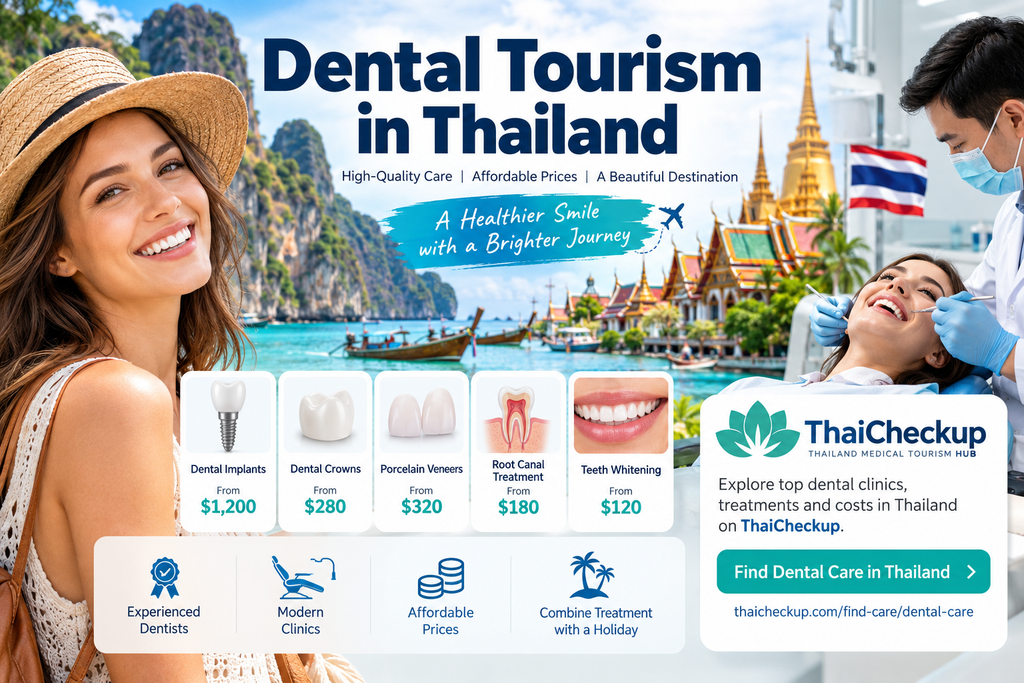
To illustrate advertised starting prices, the following figures are taken from ThaiCheckup’s dental care listings:
| Dental Treatment | Advertised Starting Price (USD) |
|---|---|
| Dental implants | $1,200 |
| Dental crowns | $280 |
| Porcelain veneers | $320 |
| Root canal treatment | $180 |
| Professional teeth whitening | $120 |
These are indicative advertised prices, not guaranteed quotations or independently verified market averages. Actual costs may be higher after an examination.
For example, an implant quote might not include bone grafting, the abutment, a final crown, diagnostic imaging, or follow-up appointments.
A quote for veneers may depend on how many teeth are being treated and which restorative materials are used.
Before accepting a proposal, ask for a written treatment plan with every expected charge clearly identified.
Compare Dental Clinics and Treatment Costs Before Booking
Choosing a dental provider should involve more than comparing the lowest advertised prices.
You can use ThaiCheckup to explore dental care options in Thailand, including listed clinics, treatment categories, and indicative pricing in destinations such as Bangkok, Phuket, and Chiang Mai.
This can provide a starting point for comparing possible providers before requesting individual treatment plans.
However, any directory listing should be checked independently. Verify the dentist’s credentials, ask about infection control practices, and confirm the full price directly with the clinic before making a booking.
How to Choose a Dental Clinic in Thailand
Finding the right clinic takes some research, particularly if you’re considering surgery or a treatment that requires ongoing care.
Check the Dentist’s Qualifications
Find out who will perform the procedure, rather than relying only on the name of the clinic.
Ask about the dentist’s professional registration, relevant training, and experience with your specific treatment.
Thailand’s Dental Council provides an online dentist verification service that can help patients check professional licensing.
Ask About Hygiene and Infection Control
Proper sterilization and infection prevention are essential in dental settings.
Ask how instruments are sterilized, how equipment is maintained, and what procedures are followed to reduce infection risks.
Recognized facility accreditation may provide additional information, although accreditation alone does not guarantee a successful outcome.
Read Patient Reviews Carefully
Reviews can help you understand how a clinic communicates with patients and handles appointments.
Look for detailed feedback about treatment explanations, aftercare, unexpected costs, and how problems were addressed.
Don’t rely exclusively on testimonials displayed on a clinic’s own website.
Request an Itemized Treatment Plan
A written treatment plan should clearly explain:
- Which teeth need treatment and why
- The proposed procedures and reasonable alternatives
- Materials or implant systems being used
- Estimated number of appointments
- Total expected costs and possible additional charges
- Recovery requirements and follow-up arrangements
If the clinic cannot answer reasonable questions about its treatment recommendations, consider seeking another opinion.
Planning a Dental Trip to Thailand
Organizing dental treatment abroad is different from booking an ordinary vacation.
Get a Dental Assessment Before Traveling
Consider visiting your regular dentist before arranging international treatment.
Existing X-rays or other relevant records may help a prospective overseas clinic understand your situation. However, the treating dentist may need to conduct another examination before confirming the plan.
Do not assume an online quote is a final diagnosis.
Allow Enough Time for Treatment and Recovery
Some procedures may be completed in one appointment, while others require multiple visits.
Dental implant treatment is particularly important to plan carefully. The healing period between placing an implant and attaching the final restoration may last several months, depending on the individual case.
Ask your dentist when it will be appropriate to fly, resume normal activities, and return to work.
Avoid booking a tightly packed sightseeing schedule immediately after invasive dental treatment.
Calculate Your Complete Travel Budget
The cost of a dental trip goes beyond the clinic’s invoice.
Your overall budget may include airfare, accommodations, local transportation, meals, travel insurance, additional appointments, and potential return visits.
A procedure with a lower initial treatment cost may not necessarily be cheaper once these expenses are included.
Arrange Follow-Up Care at Home
Before traveling, discuss the proposed treatment with your regular dentist and ask whether local follow-up care will be available.
Some complications require prompt attention, and returning to Thailand may not be practical.
Request copies of your treatment records, relevant imaging, and details of any implant components or restorative materials used.
Understanding the Risks of Dental Tourism
Dental tourism can offer patients additional choices, but complications can occur anywhere.
The U.S. Centers for Disease Control and Prevention advises medical travelers to research clinicians and facilities, understand infection risks, and arrange appropriate follow-up care.
Potential dental complications include infection, persistent pain, problems with restorations, and the need for further treatment.
Traveling far from the original provider can make these issues more difficult and expensive to manage.
Ask what happens if a crown breaks, an implant develops a complication, or your treatment requires an adjustment after you return home.
It’s also worth checking your insurance policy. Standard travel insurance may exclude planned dental procedures or complications resulting from elective treatment.
Is Dental Tourism in Thailand Worth It?
The answer depends on the treatment you need, your budget, and how comfortably you can manage care across two countries.
For someone requiring extensive restorative work, the difference between quotes at home and abroad may be large enough to justify exploring overseas treatment.
For a simple cleaning or a minor filling, travel expenses could outweigh any savings.
Clinical quality, continuity of care, and your ability to attend follow-up appointments should carry at least as much weight as the initial price.
If you are comparing options, obtain more than one written quote and discuss the proposed treatment with an appropriately qualified dentist.
Frequently Asked Questions
Is dental treatment in Thailand cheaper than in the USA?
Some clinics in Thailand advertise lower prices for procedures such as implants, crowns, and veneers. However, savings depend on the treatment, clinic, materials, and travel expenses. Compare complete written quotes rather than headline prices.
How long should I stay in Thailand for dental work?
The required stay varies by procedure. Some treatments may involve only a short visit, while implants or complex restorations can require several appointments and possibly another trip after healing. Your treating dentist should provide an individualized schedule.
Is it safe to get dental implants in Thailand?
Dental implants have risks in any country. Safety depends on factors such as the patient’s health, the dentist’s qualifications, treatment planning, infection prevention, and follow-up care. Independent credential checks and a detailed consultation are important.
Can I combine dental treatment with a holiday in Thailand?
It may be possible, but recovery should take priority. Ask your dentist about restrictions on exercise, swimming, alcohol, flying, and other activities after treatment.
What should I ask a Thai dental clinic before booking?
Ask for the dentist’s name and qualifications, a detailed treatment plan, itemized prices, expected recovery time, possible complications, and arrangements for follow-up care.
Final Thoughts
Thailand offers international patients a range of dental treatment options, from cosmetic procedures to complex restorative care.
The potential savings can be appealing, but the best decision is not always the cheapest one.
Spend time understanding the proposed treatment, verifying professional credentials, comparing complete costs, and arranging care after you return home. A well-planned dental trip should prioritize your long-term oral health, not simply a lower initial price.
This article is intended for general information and does not replace an individual assessment or advice from a licensed dental professional.