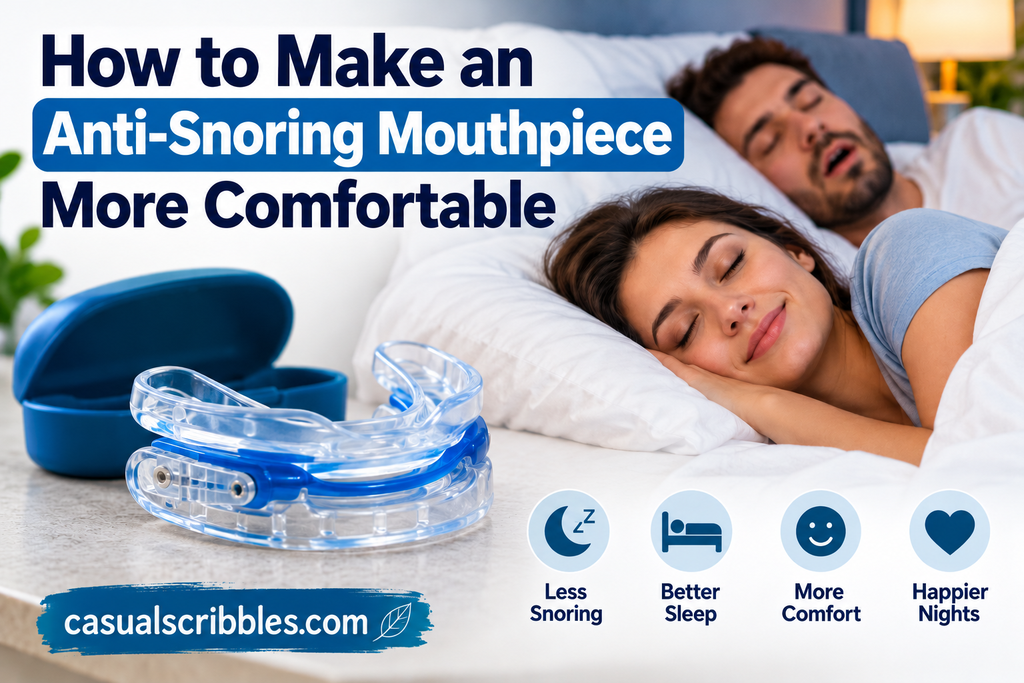
Snoring can make a peaceful night’s sleep difficult, especially when it regularly wakes your partner. Anti-snoring mouthpieces are one option people explore to reduce nighttime noise, but getting used to wearing one is not always easy.
A mouthpiece that feels awkward, causes pressure, or slips out during sleep may be difficult to wear consistently. Understanding how these devices work, what a comfortable fit feels like, and when to seek professional advice can make the experience easier.
Why Does Mouthpiece Comfort Matter?
Many anti-snoring mouthpieces work by gently moving the lower jaw forward. These devices, called mandibular advancement devices, help create more space in the upper airway during sleep.
However, wearing an oral appliance introduces a new sensation. Some users experience temporary changes in saliva production, mild pressure around their teeth, or morning jaw stiffness.
Comfort matters because an appliance needs to be worn consistently to provide its intended benefit. An uncomfortable fit may lead someone to remove the device during the night or stop using it altogether.
A properly selected and professionally evaluated mouthpiece can help address these problems.
How to Adjust Your Anti-Snoring Mouthpiece
Finding a comfortable fit starts with understanding the particular device you are using. Some mouthpieces feature adjustable settings, while others are molded to the user’s teeth.
Always follow the manufacturer’s instructions rather than forcing the appliance into a different position.
For people using an adjustable design, small, gradual changes may be easier to tolerate than aggressive adjustments. It is also important to pay attention to how the teeth and jaw feel after removing the appliance.
For additional information, Snorple’s anti-snoring mouthpiece adjustment guide discusses fitting, jaw discomfort, adjustment considerations, and signs that a device may need replacing.
If an appliance causes persistent pain, changes in your bite, or discomfort that continues throughout the day, stop adjusting it yourself and consult a qualified dental professional.
Common Mouthpiece Comfort Problems
1. Jaw Discomfort
Some people notice jaw stiffness when they begin wearing an oral appliance.
An uncomfortable jaw position, excessive advancement, or an unsuitable device can contribute to soreness. Persistent pain should not be treated as a normal part of adjustment.
A dentist experienced in sleep-related oral appliances can evaluate the fit and check for possible joint or dental problems.
2. Excessive Saliva or Dry Mouth
Changes in saliva production are another common concern.
Some people produce more saliva while getting used to a mouthpiece. Others experience dryness, particularly when sleeping with their mouth open.
Discuss persistent symptoms with a healthcare professional, especially when they interfere with sleep or make the appliance difficult to wear.
3. An Unstable Fit
A mouthpiece that frequently moves, falls out, or places uneven pressure on the teeth may not fit correctly.
Avoid trying to fix an unstable appliance by forcing the jaw into a more uncomfortable position.
Instead, review the fitting instructions and arrange a professional assessment when necessary.
Simple Habits That May Improve Sleep Quality
An anti-snoring mouthpiece is only one part of better sleep habits. Your evening routine and sleeping environment can also influence sleep quality.
Try maintaining a consistent bedtime, keeping your bedroom quiet and comfortable, and avoiding alcohol close to bedtime. Sleeping on your side may reduce snoring for some people who primarily snore while lying on their backs.
Nasal congestion can also affect nighttime breathing. Addressing allergies or other causes of congestion with appropriate medical advice may help.
These habits do not replace treatment for a diagnosed sleep disorder, but they can support healthier sleep routines.
Are Anti-Snoring Mouthpieces an Alternative to CPAP?
Oral appliances and CPAP machines are different approaches to sleep-related breathing problems.
CPAP delivers pressurized air to help keep the airway open during sleep. Certain custom oral appliances reposition the lower jaw to improve airway space.
For selected patients with obstructive sleep apnea who cannot tolerate CPAP or prefer another option, a sleep physician may recommend a professionally fitted oral appliance.
However, an over-the-counter anti-snoring mouthpiece should not automatically be considered a replacement for prescribed CPAP therapy.
Loud snoring accompanied by breathing pauses, gasping, choking, or excessive daytime sleepiness may indicate obstructive sleep apnea. These symptoms deserve medical evaluation.
When Should You Replace an Anti-Snoring Mouthpiece?
Even a comfortable mouthpiece may eventually become worn or damaged.
Look for visible cracks, changes in shape, loose-fitting components, or surfaces that can no longer be adequately cleaned.
Replacement schedules vary depending on the device, materials, and manufacturer’s instructions.
If the fit changes, consult the manufacturer or your dental professional before continuing use.
Final Thoughts
Making an anti-snoring mouthpiece more comfortable begins with proper fitting, reasonable expectations, and attention to changes in your jaw or teeth.
Rather than focusing only on stopping snoring as quickly as possible, consider whether the device is suitable for your needs and comfortable enough to use consistently.
Good sleep is about more than reducing noise. It is also about protecting your breathing, dental health, and overall well-being.
This article is intended for general education and is not a substitute for professional medical or dental advice.