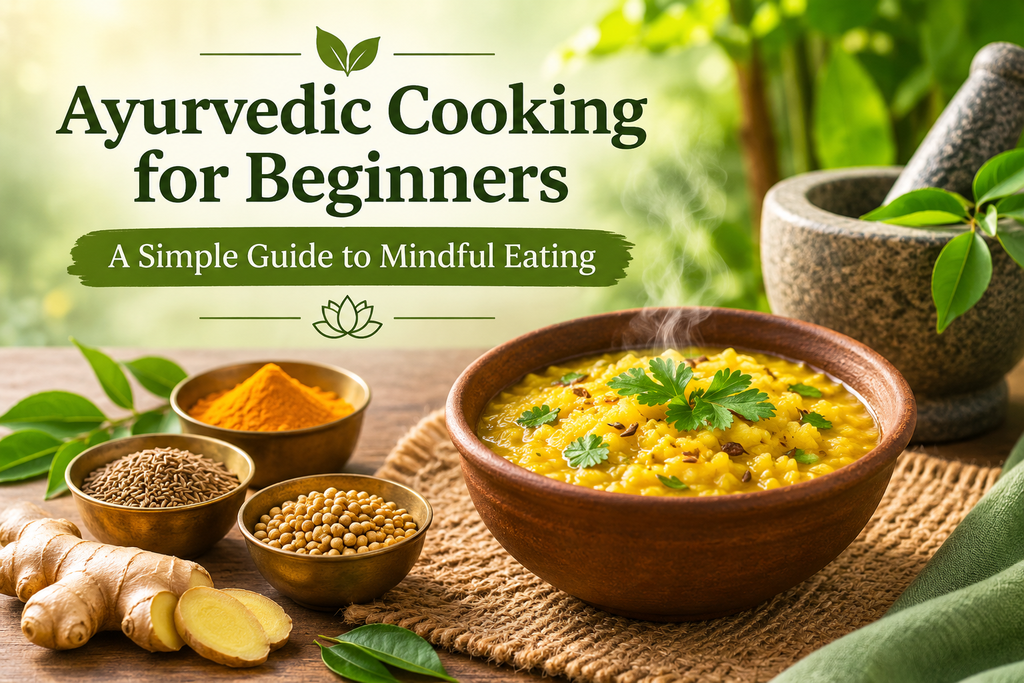
A warm bowl of rice, freshly cooked vegetables, and the aroma of toasted cumin can turn an ordinary meal into something worth slowing down for. That everyday experience is a useful introduction to Ayurvedic cooking.
Rooted in India’s traditional Ayurvedic system, this approach to food emphasizes seasonal ingredients, thoughtful preparation, eating habits, and individual preferences. You don’t need an elaborate kitchen or a collection of unfamiliar herbs to explore its culinary traditions.
What Is Ayurvedic Cooking?
Ayurvedic cooking is a traditional approach to preparing and eating food influenced by the principles of Ayurveda. It often emphasizes freshly prepared meals, varied flavors, seasonal produce, and an awareness of how different foods feel to the individual.
Traditional Ayurvedic teachings also describe three doshas—Vata, Pitta, and Kapha—as ways of understanding individual characteristics. These are traditional concepts rather than scientifically established medical classifications.
For everyday home cooks, some of the most accessible ideas are simple: cook with care, choose ingredients you enjoy, and make mealtimes less rushed.
Everyday Ingredients in Ayurvedic-Inspired Cooking
Many ingredients associated with Ayurvedic cooking are already familiar to people who enjoy Indian cuisine.
- Turmeric: Adds a golden color and earthy flavor to rice, soups, and vegetable dishes.
- Cumin: Brings warmth and depth to lentils, rice, and sautéed vegetables.
- Ginger: Adds a fresh, spicy character to savory meals and beverages.
- Coriander: Offers a mild citrus-like flavor in both seed and leaf form.
- Lentils and rice: Provide a practical foundation for filling, versatile meals.
These ingredients can contribute flavor and variety to a balanced diet without needing to be treated as medicines.
Learning Ayurvedic Cooking Through Traditional Experiences
Reading about Ayurvedic cooking is one way to learn, but observing traditional preparation methods can provide a different perspective.
For people interested in a more immersive experience, Vaidyagrama Ayurveda is an Ayurvedic healing village near Coimbatore in South India. Its programs incorporate traditional Ayurvedic practices, and its guest activities include cooking demonstrations that introduce visitors to elements of Ayurvedic food preparation.
Experiences like these can help visitors understand the cultural background of the food, the reasoning behind traditional ingredient combinations, and the role of shared meals in Ayurvedic living.
A Simple Ayurvedic-Inspired Meal to Try
One approachable option is a comforting rice-and-lentil dish.
Ingredients:
- ½ cup yellow split mung beans
- ½ cup basmati rice
- 3–4 cups water
- 1 teaspoon cumin seeds
- ½ teaspoon turmeric
- 1 teaspoon grated fresh ginger
- 1 tablespoon cooking oil or ghee
- Salt to taste
Method:
- Rinse the rice and split mung beans thoroughly.
- Warm the oil or ghee in a pot and briefly toast the cumin seeds.
- Add the ginger and turmeric, stirring gently.
- Add the rice, mung beans, and water.
- Simmer until everything is fully cooked and soft, adding water as needed.
- Season to taste and serve warm.
Adjust the consistency and seasoning to suit your preferences. This dish is inspired by common Indian rice-and-lentil preparations and is not a prescribed treatment or medical diet.
Mindful Habits Beyond the Recipe
Ayurvedic food traditions are about more than ingredients. The experience surrounding a meal also matters.
Consider setting aside a few minutes to eat without your phone, enjoying meals at a comfortable pace, and incorporating a variety of vegetables, grains, and protein sources.
You can also experiment with seasonal produce instead of following restrictive food rules. The goal is to make cooking enjoyable and sustainable.
Final Thoughts
Ayurvedic cooking offers a way to explore Indian culinary traditions while becoming more attentive to the preparation and enjoyment of food.
Whether you begin with a simple rice-and-lentil meal, experiment with familiar spices, or attend a traditional cooking demonstration, the most useful approach is one that fits your lifestyle.
Ayurvedic foods can be enjoyed as part of a varied diet, but Ayurvedic treatments and herbal remedies should not replace evidence-based medical care, especially for serious health conditions.