
Making a latte at home comes down to two things: a concentrated coffee base and warm milk with a smooth, creamy texture. For a practical 10–12 oz latte, start with one or two shots of espresso and about 6–8 oz (180–240 ml) of milk. Heat and froth the milk until it is glossy and pourable, pour it into the espresso, and finish with only a thin layer of foam.
Don’t own an espresso machine? You can still make a satisfying latte-style drink with a moka pot, AeroPress, espresso-size coffee capsule, or strong brewed coffee.
What Is a Latte?
A caffè latte is an espresso-based coffee made with espresso, a relatively large amount of steamed milk, and a thin layer of milk foam. It is therefore milkier and softer-tasting than many other espresso drinks.
Although recipes vary from café to café, the important distinction is that a traditional latte begins with espresso, rather than ordinary drip coffee.
Sweetener isn’t required. Vanilla, caramel, maple, chocolate, and other flavors are variations rather than basic latte ingredients.
Easy Homemade Latte Recipe

For one 10–12 oz drink, use:
- 1–2 shots espresso
- 6–8 oz (180–240 ml) cold milk
- Optional syrup or sweetener to taste
Brew your espresso into a warm mug.
Heat and texture the milk until it is smooth, glossy, and pourable. A useful home range is around 140–150°F (60–65°C); Starbucks, Breville, and Sage/Breville guidance all fall around this region.
Swirl the milk to keep the foam integrated, then pour it into the espresso. Finish with a thin layer of foam and serve immediately.
Easy Home Latte Ratios
| Cup size | Espresso | Milk | Foam | Best for |
|---|---|---|---|---|
| 8 oz | 1 shot | About 5–6 oz | Thin | Stronger coffee flavor |
| 10–12 oz | 1–2 shots | About 6–8 oz | Thin | Everyday latte |
| 16 oz | 2 shots | About 10–12 oz | Thin | Larger drink |
These are starting points rather than official rules. Starbucks, Nespresso, independent cafés, and home-barista recipes all use somewhat different proportions.
What Coffee Should You Use for a Latte?
Espresso is the traditional choice because its concentrated flavor can stay noticeable after several ounces of milk are added.
You do not need a special bean labeled “latte coffee.” Medium, medium-dark, and espresso-style roasts can all work. Choose a coffee whose flavor you enjoy and that remains noticeable through milk.
Remember that espresso describes a brewing method, not one mandatory roast level.
How to Make a Latte With an Espresso Machine

Brew one or two espresso shots directly into your mug.
Pour cold milk into your steaming pitcher and purge the steam wand if your machine’s instructions call for it.
Place the wand tip near the milk surface and introduce a small amount of air. Then position it slightly deeper so the milk begins to rotate in a whirlpool.
Stop adding air early. For a latte, you want smooth, integrated milk rather than a large cap of dry foam.
Continue heating to around 140–150°F (60–65°C), then turn off the steam. Breville also recommends this approximate temperature zone for latte milk.
Tap away obvious surface bubbles, swirl until the milk looks glossy, and pour it promptly into the espresso.
How to Make a Latte Without an Espresso Machine

An espresso machine gives the most traditional result, but it isn’t the only workable home setup.
Moka Pot
A moka pot produces concentrated, espresso-like coffee that stands up well to milk. It is not true pump-driven espresso, so call it moka-pot coffee rather than an espresso shot.
Brew your moka pot according to its manufacturer’s instructions. Pour a small serving of the concentrated coffee into your mug, then add hot textured milk.
If your drink tastes too milky, use less milk rather than trying to force an arbitrary espresso ratio onto your moka pot.
AeroPress
An AeroPress can make concentrated coffee suitable for milk drinks, although its extraction is different from espresso.
Use a properly sourced or personally tested concentrated AeroPress recipe rather than randomly reducing water. Once brewed, combine the concentrate with steamed or frothed milk.
Using a Pod or Capsule Machine
Choose an espresso-size capsule when your machine offers one.
Brew one or two shots depending on your cup size and preference, then add textured milk.
For reference, Nespresso publishes one latte recipe using 40 ml coffee with 110 ml milk, showing again that latte proportions vary by system.
Can You Make a Latte With Regular Coffee?
Yes, although technically you are making a latte-style milk coffee rather than a classic espresso latte.
Brew the coffee somewhat stronger than you normally drink it so its flavor does not disappear once the milk is added.
If your drink becomes watery, the usual problem is either too weak a coffee base or too much milk.
How to Make a Latte With Instant Coffee
Instant coffee can also make a simple latte-style drink.
Dissolve the instant coffee according to the manufacturer’s directions but use a concentrated serving appropriate for mixing with milk. Add your hot frothed milk and adjust the strength to taste.
Do not call the instant-coffee concentrate espresso.
How to Froth Milk for a Latte
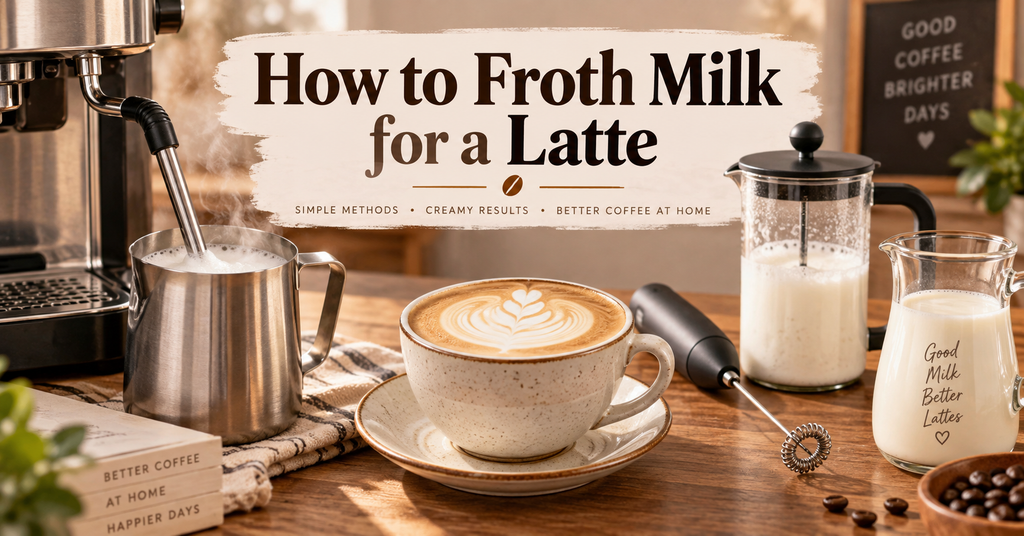
Latte milk should look smooth and shiny rather than stiff and bubbly.
Think wet paint, not bubble bath.
Correct espresso-machine microfoam contains very fine bubbles integrated throughout the milk. A whisk, jar, or basic frother can produce useful foam, but it may not recreate the same microfoam structure.
Steaming Milk With a Steam Wand
Start with cold milk.
Introduce only a small amount of air near the surface.
Move the wand slightly deeper to create a whirlpool.
Continue heating while keeping the milk moving.
Stop around 140–150°F (60–65°C).
Swirl the pitcher and pour immediately.
Starbucks’ current home latte-art instructions similarly call for brief aeration, a whirlpool and milk heated to about 150°F.
Do not boil the milk. Excessive heat can create unpleasant cooked or scalded flavors and makes texture harder to control.
Electric Milk Frother
Fill only to the machine’s designated milk line.
Choose the hot-froth or latte setting if available.
Allow the cycle to finish and pour immediately.
Electric frothers are especially useful for beginners because they reduce technique requirements, although their foam may differ from steam-wand milk.
Handheld Frother
Warm the milk separately.
Pour it into a tall container so there is space for expansion.
Start frothing near the surface, then move slightly deeper to mix the bubbles through the milk.
Stop before the milk becomes stiff and spoonable.
French Press
Warm the milk and pour it into a clean French press, leaving plenty of expansion space.
Pump the plunger up and down repeatedly until the milk becomes foamy.
Swirl before pouring.
This method creates useful foam without a dedicated milk frother.
Whisk Method
Heat the milk in a saucepan without boiling it.
Whisk vigorously until foam forms.
A whisk can make a perfectly usable home latte, although the bubbles are generally less fine and uniform than properly steamed milk.
Jar Method
Avoid sealing very hot milk inside a jar and shaking it because heated liquid can create pressure and increase burn risk.
If you use a jar method, follow the jar manufacturer’s heat guidance. A safer approach is to aerate milk before it becomes very hot and remove the lid before any microwave heating.
What Milk Is Best for a Latte?

There is no single milk that every person has to use.
Whole Milk
Whole milk produces a rich body and is generally forgiving when creating smooth textured milk. Starbucks specifically recommends it in its latte-art guide because of the smooth foam it produces.
2% Milk
Reduced-fat milk gives a useful balance of body and foam while tasting lighter than whole milk.
Skim Milk
Skim milk can produce comparatively airy foam but generally gives the finished drink less creamy body.
Oat Milk Latte
Oat milk can work very well, particularly products specifically formulated for coffee.
Results differ significantly between brands, so do not assume every oat milk will steam identically.
Soy Milk
Soy milk can create useful foam, but formulation and temperature affect the result. If it begins separating, try a coffee/barista formulation and avoid overheating it.
Almond Milk
Almond milk typically creates a lighter drink. Foam stability varies widely by product, and barista versions often perform more predictably.
How to Assemble a Latte
Brew the coffee first.
If you want syrup, stirring it into the hot espresso can help distribute it through the drink.
Prepare the milk.
Swirl the milk before pouring so liquid and foam remain integrated.
Pour the milk steadily into the espresso.
Finish with only a thin layer of foam.
A latte should contain less foam than a cappuccino.
Easy Homemade Latte Flavors
Vanilla Latte
Stir vanilla syrup into the espresso before adding the milk.
Alternatively, combine a small amount of vanilla extract with your preferred sweetener.
If your syrup is already sweet, additional sugar usually isn’t necessary.
Caramel Latte
Stir caramel syrup or a modest amount of caramel sauce into the hot espresso.
Thick caramel sauce dissolves more easily in the hot coffee than after cold or warm milk has been added.
Mocha
Mix chocolate into the espresso before adding milk. Once chocolate is added, the drink is commonly called a caffè mocha.
Cinnamon Latte
Use cinnamon syrup, cinnamon-infused sweetener, or a light dusting of ground cinnamon.
Ground cinnamon will not completely dissolve, so use it sparingly.
Maple or Hazelnut Latte
Add a small amount to the espresso, stir, taste, and increase only if needed.
Sweetness is personal. Do not treat large syrup quantities as part of a standard latte.
Latte vs Cappuccino: What’s the Difference?
Both drinks use espresso and milk, but a latte generally contains more steamed milk and less foam.
A cappuccino uses less liquid milk and a more substantial layer of aerated milk, so its espresso tends to taste more prominent.
Modern café definitions and serving sizes vary, so an exact “equal thirds everywhere” rule is too rigid. Breville likewise notes that ratios and foam interpretation differ between cafés and regions.
Latte vs Flat White
A flat white is typically smaller and more espresso-forward than a latte, with finely textured milk and very little visible foam.
Nespresso describes its flat white as having less milk than a latte and a barely-there layer of microfoam.
Definitions differ by café and country, so avoid claiming one universal flat-white ratio.
Latte vs Café au Lait
A traditional latte uses espresso + steamed milk.
Café au lait and similar coffee-and-milk drinks generally use brewed coffee + hot milk.
That distinction explains why adding milk to ordinary drip coffee does not technically convert it into an espresso latte.
Why Doesn’t My Homemade Latte Taste Like a Coffee-Shop Latte?
The latte tastes too milky
Use another espresso shot, reduce the milk, or choose a smaller mug.
If you aren’t using espresso, strengthen your properly brewed coffee concentrate rather than simply adding random extra grounds.
The latte tastes watery
Your coffee base may be too weak.
A large mug with one mild shot can also dilute the coffee flavor.
The latte tastes bitter
The problem may come from the espresso extraction, beans, roast preference, old coffee, or overheated milk.
Do not automatically blame dark roast alone.
The foam has large bubbles
You probably introduced too much air.
Aerate more gently and for less time, create better circulation in the pitcher, then tap and swirl before pouring.
The milk won’t froth
Check the milk formulation, temperature, frother position, amount of milk and cleanliness of the equipment.
Plant-milk performance can vary significantly by brand.
The foam is too stiff
You added too much air.
A latte needs fluid, pourable milk rather than dry spoonable foam.
The latte cools too quickly
Preheat the mug with hot water, prepare coffee and milk close together, and serve immediately.
Frequently Asked Questions
What is the ratio of milk to coffee in a latte?
There is no universal ratio. For a 10–12 oz home latte, one or two espresso shots with roughly 6–8 oz milk is a practical starting point.
Can you make a latte without an espresso machine?
Yes. Moka-pot coffee, concentrated AeroPress coffee, espresso-size pod coffee, or stronger brewed coffee can all work. Only the espresso-machine version uses true espresso.
Can regular coffee be used for a latte?
Yes for a latte-style home drink, but traditional caffè latte uses espresso.
How hot should milk be for a latte?
Around 140–150°F (60–65°C) is a practical starting range supported by current Starbucks and Breville/Sage guidance.
How much foam should a latte have?
Only a relatively thin, integrated layer. A cappuccino normally has noticeably more foam.
What milk is best for a latte?
Whole milk is rich and easy to texture, but 2%, skim, oat, soy and almond milk can all work. Plant-milk performance depends heavily on formulation.
Can you make a latte with a moka pot?
Yes. A moka pot creates concentrated espresso-like coffee that works very well with textured milk, although it isn’t true espresso.
Can you make a latte with instant coffee?
You can make a latte-style drink with concentrated instant coffee and hot frothed milk.
How do you make a vanilla latte?
Stir vanilla syrup into hot espresso, then add your steamed or frothed milk.
How long can a milk latte sit out?
Treat milk drinks as perishable. FDA guidance says refrigerated perishables should generally not remain at room temperature for more than two hours, or more than one hour when temperatures are above 90°F/32°C. Refrigerators should be kept at 40°F/4°C or below.
Final Tip
The biggest improvement usually doesn’t come from buying a more expensive machine. Start by getting three things consistent: coffee strength, milk quantity, and milk texture. Once those are balanced, adjust espresso, milk, and sweetness to fit your own cup rather than chasing one supposedly universal latte ratio.