
Cold foam is one of the easiest ways to give iced coffee a café-style finish at home. For a simple version, combine ¼ cup very cold skim or 2% milk with 1 teaspoon of simple syrup if you want sweetness, then froth it for roughly 20–40 seconds until it becomes light, fine-bubbled, and pourable.
Pour it over cold brew, iced coffee, an iced latte, chai, or matcha and drink it right away.
Jump to Recipe
What Is Cold Foam?
Cold foam is milk or a milk-based mixture that is aerated while cold until it develops a layer of bubbles and enough body to sit briefly on top of an iced drink.
Unlike steamed latte foam, it is prepared without steam or intentional heating. It is also lighter and more pourable than whipped cream.
Good cold foam should look smooth rather than dry or stiff. It should pour slowly and sit on the drink for a while before gradually mixing into it.
Cold Foam vs Sweet Cream Cold Foam
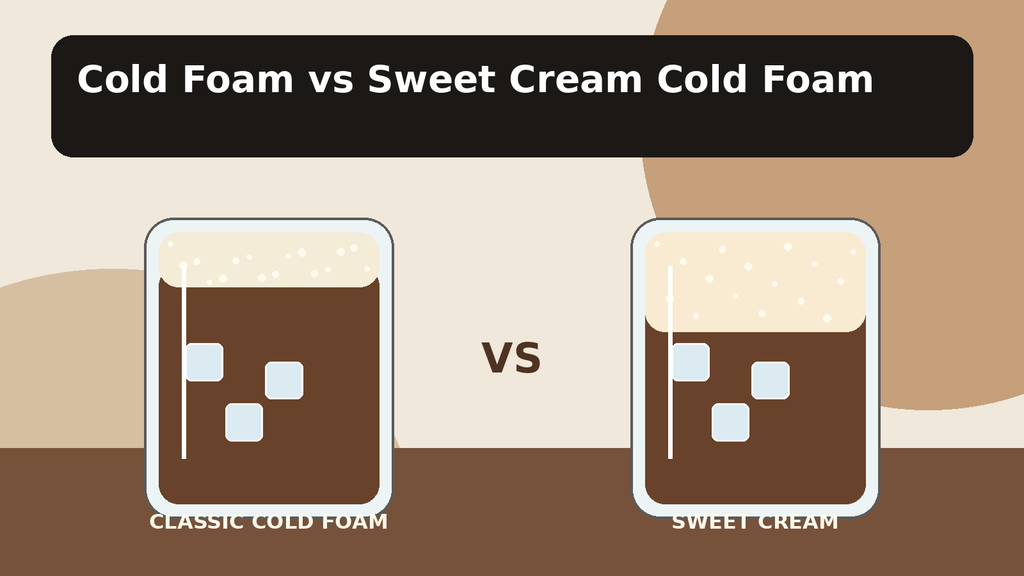
These terms are often used as though they mean the same thing, but they are useful to separate.
Classic cold foam is primarily milk. It tends to be light, airy, and milk-forward.
Sweet cream cold foam is usually richer. Home recipes commonly use milk with cream and vanilla syrup, producing a thicker topping.
Neither should be whipped until stiff. Cold foam should remain pourable rather than becoming whipped cream.
What Milk Makes the Best Cold Foam?
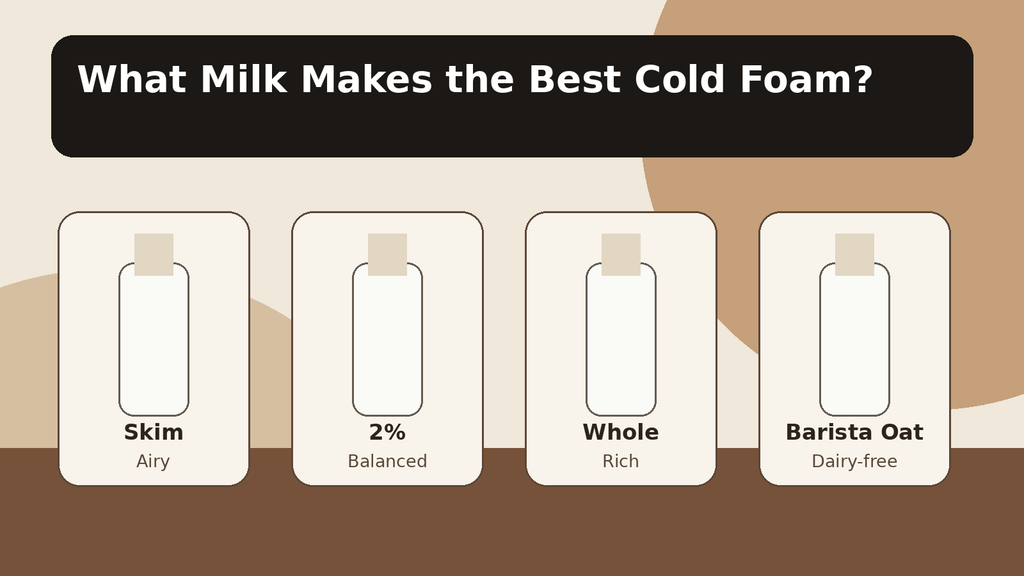
There is no single milk that is “best” for every type of foam.
If you want maximum airiness, start with skim or low-fat milk. Research on dairy foams shows that protein and fat levels substantially affect foam formation, and lower-fat systems can generate more foam under some mechanical-frothing conditions.
For a balance of airiness and creamy flavor, 2% milk is a good starting point.
Whole milk gives the foam more richness but may produce a softer, less voluminous result.
If what you really want is thick vanilla sweet cream foam, combine milk with a smaller amount of cream instead of trying to make heavy cream behave like classic milk foam.
How to Make Cold Foam With a Milk Frother
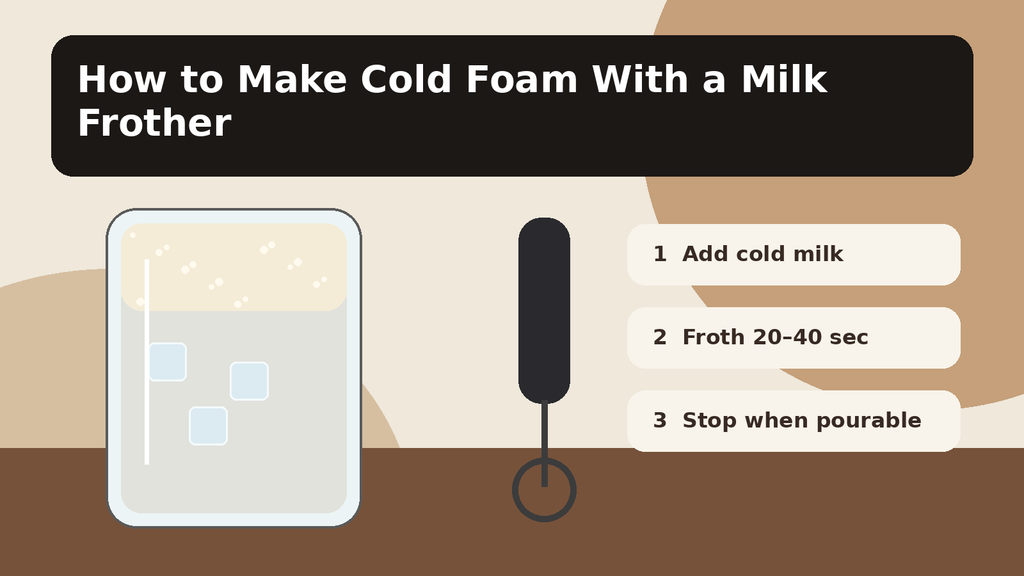
A handheld frother gives you the most control for one drink.
- Pour ¼ cup of very cold milk into a tall, narrow glass.
- Add sweetener or vanilla if desired.
- Leave plenty of empty space above the liquid.
- Place the frother head slightly below the surface.
- Froth for approximately 20–40 seconds.
- Move the frother slightly as the milk expands.
- Stop when the bubbles look fine and the foam pours slowly.
- Add it immediately to your drink.
Don’t aim for stiff peaks. That texture belongs closer to whipped cream than cold foam.
How to Make Cold Foam Without a Frother
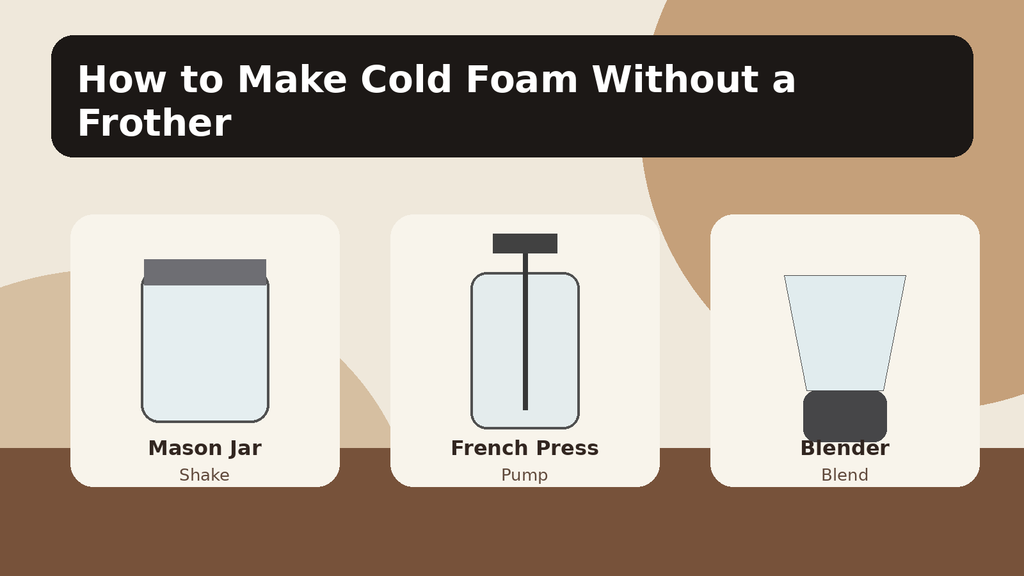
A frother is convenient, but it is not required.
Mason Jar Method
Pour your mixture into a jar that has a secure lid, leaving plenty of empty space.
Close tightly and shake vigorously for roughly 45–60 seconds.
This method is inexpensive and easy, although the bubbles are usually larger and less uniform than those produced with a frother.
French Press Method
Add the cold milk mixture to a clean French press.
Move the plunger rapidly up and down for around 30–60 seconds until the milk increases in volume and becomes uniformly foamy.
A French press can be especially useful when preparing foam for more than one drink.
Blender Method
A countertop blender works better when there is enough liquid for the blades to circulate properly.
Blend briefly until aerated, stopping before the mixture warms noticeably.
Because blender size and power vary, use the texture rather than a rigid time as your final guide.
Immersion Blender Method
Place the mixture in a tall, narrow container and keep the blending head safely submerged.
Blend in short bursts to introduce air without spraying milk around the kitchen.
Again, stop when the foam is pourable.
Cold Foam Methods Compared
A handheld frother offers the best combination of speed and control for a single drink.
A French press is a strong alternative if you already own one.
A jar is inexpensive but generally produces larger bubbles.
A regular blender becomes more useful when preparing several servings.
The important point is not matching one exact number of seconds—it is stopping at the correct texture.
How to Make Vanilla Cold Foam
Use the main recipe and add about ⅛ teaspoon vanilla extract.
If you use vanilla syrup instead, let the syrup provide both sweetness and vanilla flavor rather than adding several sweeteners at once.
Taste before adding more syrup because extra liquid can alter the foam.
How to Make Sweet Cream Cold Foam
For a richer home variation, try:
- 2 tablespoons cold 2% milk
- 2 tablespoons cold heavy cream
- 1 teaspoon vanilla syrup
Froth briefly until thicker but still pourable.
This is a home sweet-cream variation, not a claim about Starbucks’ store formula.
If it becomes stiff or spoonable like whipped cream, reduce the cream or froth for less time.
How to Make Starbucks-Style Cold Foam at Home
The safest way to discuss Starbucks is to use its own published at-home recipe.
Starbucks currently publishes an at-home “Vanilla Sweet Cream Cold Foam” recipe containing ¼ cup 2% milk, 1 tablespoon powdered sugar, and ¼ teaspoon vanilla extract. Its instructions say to combine the ingredients and use a preferred cold frothing method.
That recipe is useful for home preparation, but it should not be described as the secret or exact formula used inside Starbucks stores unless Starbucks publishes such a claim itself.
Can You Make Cold Foam With Oat, Soy, or Almond Milk?
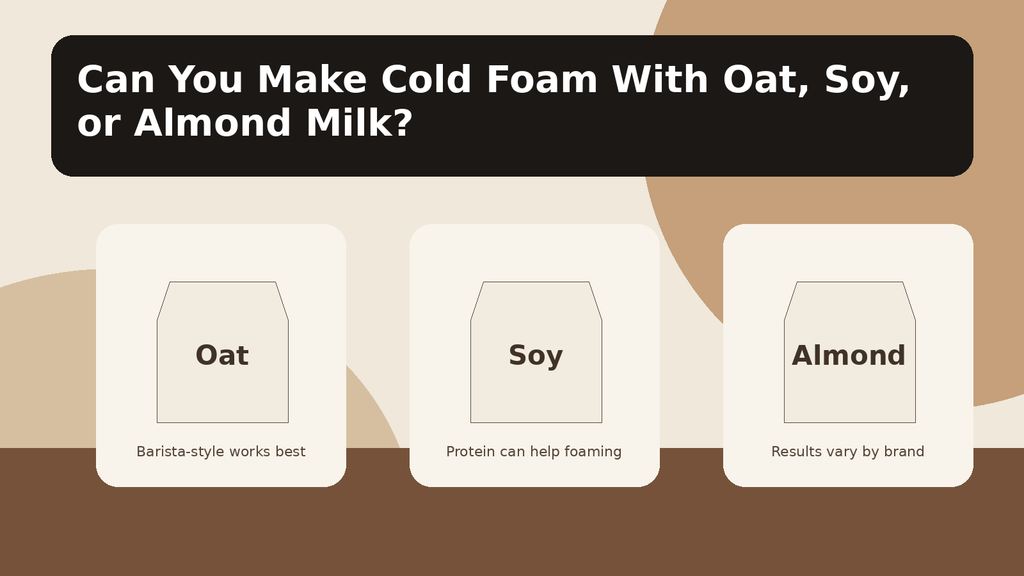
Yes, but the individual product matters.
Plant-based milks vary in protein type, fat, stabilizers, particles, emulsifiers, and manufacturing process, all of which affect foaming.
Oat Milk Cold Foam
A barista-style oat drink is a sensible starting point because these products are specifically formulated to perform in coffee and foam more reliably.
Expect a slightly different texture from dairy.
Soy Milk Cold Foam
Soy can foam well because of its protein content, but formulation and flavor vary noticeably between products.
Almond Milk Cold Foam
Almond beverages can foam too, particularly products designed for barista use. Standard almond drink may produce a lighter result, so avoid promising thick café-style foam from every carton.
Why Isn’t My Cold Foam Getting Thick?
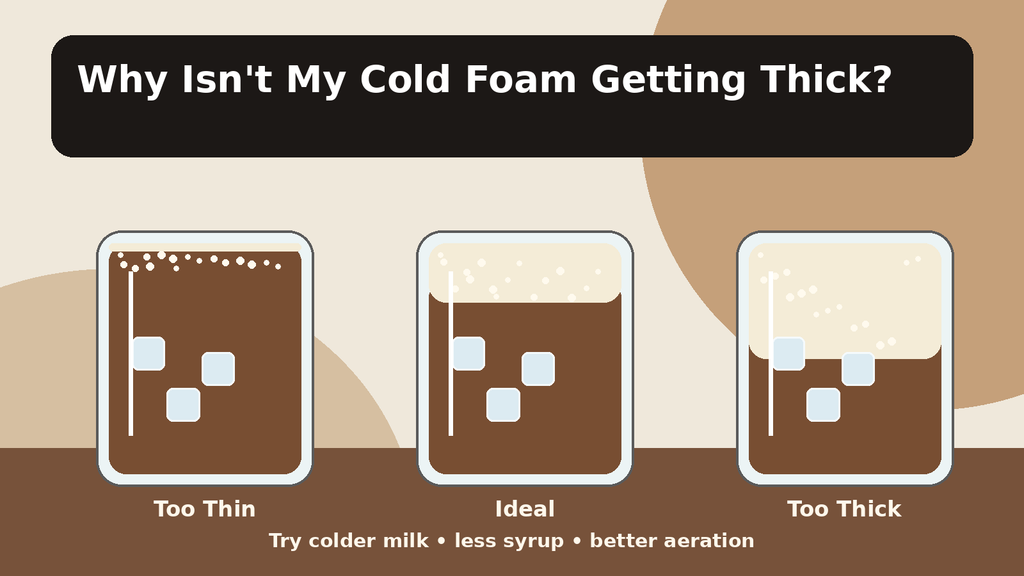
Several factors can be responsible.
The Milk Is Too Warm
Start with refrigerated ingredients, especially when the goal is cold foam rather than steamed milk foam.
The Container Is Too Wide
A narrow container provides greater liquid depth and gives a handheld frother more useful contact with the mixture.
You Added Too Much Syrup
Additional liquid can reduce the concentration of milk components responsible for the desired texture.
Try reducing syrup and adding flavor gradually.
The Milk Simply Doesn’t Foam Well
This is especially common with plant beverages because brands are formulated differently.
Try a barista version or another product.
You Stopped Too Early
Continue until the mixture clearly increases in volume and becomes fine-bubbled.
You Went Too Far
If a cream-rich mixture becomes stiff, you are effectively moving toward whipped cream.
Add a small splash of milk and use less frothing next time.
Why Is My Cold Foam Watery?
Try:
- colder milk
- less syrup
- a narrower vessel
- a different milk
- slightly longer aeration
- serving immediately
Don’t automatically reach for starches, gums, or other thickeners.
Why Does My Cold Foam Have Big Bubbles?
Large bubbles usually indicate rougher aeration.
Keep the frother just below the milk surface rather than repeatedly throwing the whisk completely above and below it.
A French press or handheld frother generally gives more control than vigorous jar shaking.
Why Does Cold Foam Sink Into the Coffee?
Some mixing is completely normal.
Cold foam is not supposed to stay as a perfectly separated white layer indefinitely.
Very thin foam, insufficient aeration, excessive syrup, or waiting too long before serving can make it blend into the drink more quickly.
Can You Make Cold Foam Ahead of Time?
Prepare the liquid base ahead if needed, but froth it shortly before drinking.
Keep dairy mixtures refrigerated in a clean sealed container.
USDA advises holding cold perishable food at 40°F / 4.4°C or below and generally limiting unrefrigerated time to two hours, or one hour when the temperature is above 90°F / 32.2°C.
Finished foam is mainly a texture phenomenon, and that texture naturally changes as bubbles drain and collapse.
Easy Cold Foam Flavors
Once you have the basic technique working, flavor it with small amounts of:
- vanilla
- caramel
- maple
- brown sugar syrup
- chocolate syrup
- pumpkin spice
- cinnamon
- salted vanilla
Liquid syrups generally disperse more readily in cold milk than granulated sugar.
When using cinnamon, remember that ground spice does not fully dissolve. A small amount as flavor or garnish usually gives a smoother experience than adding a large quantity directly to the foam.
What Drinks Can You Put Cold Foam On?
Cold foam works particularly well on:
- cold brew
- iced coffee
- iced latte
- iced Americano
- espresso over ice
- iced matcha
- iced chai
Pour it on after the drink is already assembled if you want the visible layered effect.
Cold Foam vs Whipped Cream
Cold foam is lighter and more milk-forward.
Whipped cream relies heavily on cream fat and is beaten until it becomes much stiffer and able to hold its shape for longer.
If your “cold foam” sits in a solid spoonful rather than flowing, it has probably moved too far toward whipped cream.
Frequently Asked Questions
What is cold foam made of?
The simplest version is cold milk that has been aerated. Sweetener or vanilla is optional. Richer sweet cream versions may include cream.
Can I make cold foam without a frother?
Yes. Use a French press, jar, blender, immersion blender, or another tool capable of introducing air into the cold milk.
Can I use whole milk?
Yes. It will usually taste richer but may not give the same airy volume as lower-fat milk.
Can I use heavy cream?
Use it primarily for richer sweet cream-style foam rather than classic airy cold foam. Too much can produce whipped cream.
What milk should I use?
Start with skim for a very airy foam or 2% for more balance between foam and creaminess.
Can I use oat milk?
Yes. Barista-style oat products are a practical starting point, but performance differs by brand.
How long does cold foam last?
There is no universal structural lifetime. Foam begins evolving as soon as it is made, so make it shortly before serving for the best texture.
Why won’t my cold foam thicken?
Check temperature, milk type, syrup quantity, container shape, liquid depth, and frothing technique.
Is cold foam the same as sweet cream cold foam?
No. Classic foam is primarily milk and lighter; sweet cream-style versions are richer and commonly contain milk plus cream and flavoring.
Is homemade cold foam exactly like Starbucks?
You can reproduce the general style at home, and Starbucks publishes official at-home recipes, but that does not mean every home recipe is Starbucks’ exact store formula.