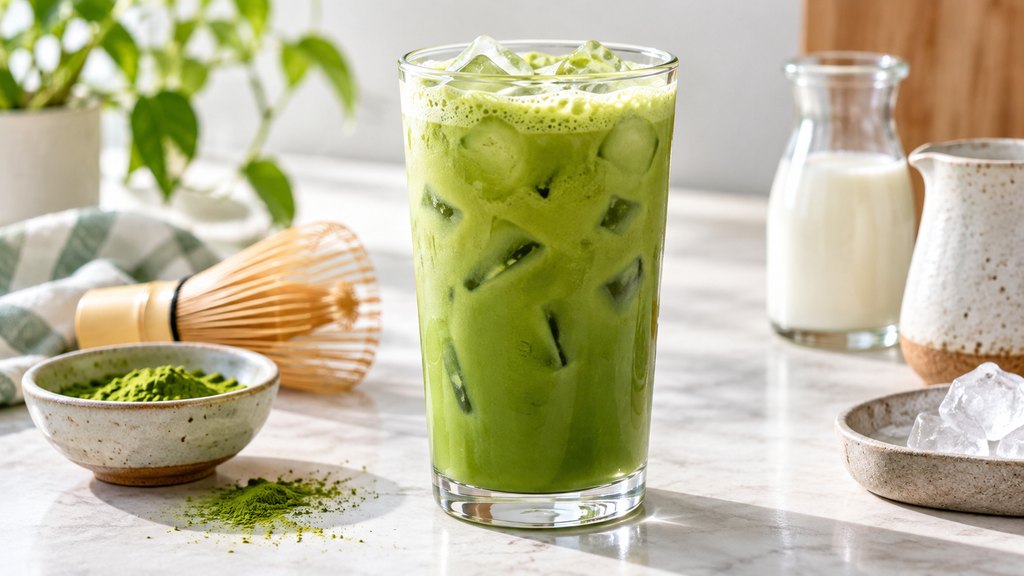
Making smooth iced matcha at home is easier than it looks. The key is not trying to stir dry matcha directly into a full glass of cold liquid. Instead, disperse the powder in a small amount of water first—or shake it vigorously—then add ice and the rest of your water.
For one glass, start with 2 grams of matcha, 45 ml warm water, 180 ml cold water and ice. For an iced matcha latte, replace the cold water with milk.
Jump to Recipe
Iced Matcha vs Iced Matcha Latte
Although the names are sometimes used interchangeably, they are different drinks.
Iced matcha is primarily matcha, water and ice. Sweetener is optional.
Iced matcha latte combines matcha with a small amount of water, milk or plant milk and ice.
If you want a lighter drink where you can taste the tea clearly, make plain iced matcha. If you prefer something creamier, make the latte variation.
Quick Iced Matcha Recipe
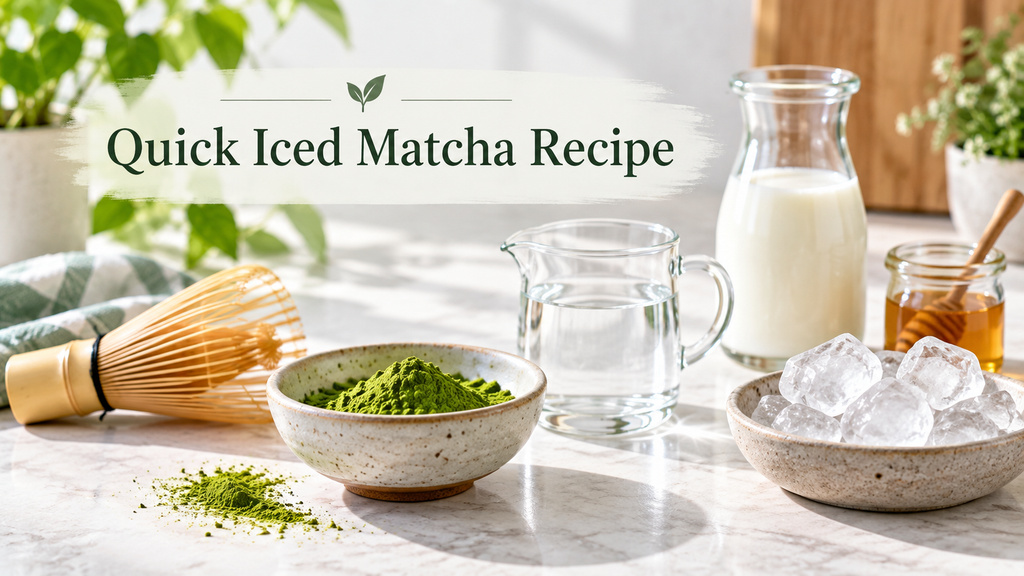
For one serving you need:
- 2 g matcha, about 1 level teaspoon depending on the powder
- 45 ml (3 tablespoons) warm water
- 180 ml (¾ cup) cold water
- About 1 cup ice
- Sweetener, optional
Sift the matcha into a small bowl. Add the warm water and whisk briskly until the powder is evenly dispersed with no dry clumps. Fill a 12- to 14-ounce glass with ice and add the cold water. Pour in the matcha concentrate, stir and drink promptly.
Matcha is very light, so teaspoon measurements vary. A small kitchen scale gives you more repeatable results.
Does Matcha Actually Dissolve?
Not in the same way sugar or salt dissolves.
Matcha is finely ground tea leaf. Whisking or shaking spreads tiny tea particles through the liquid to create a smooth suspension.
This is why a little matcha may settle at the bottom if your drink sits for a while. It does not necessarily mean you bought bad matcha or prepared the drink incorrectly.
Simply stir or swirl it again before drinking.
How to Make Iced Matcha With a Whisk
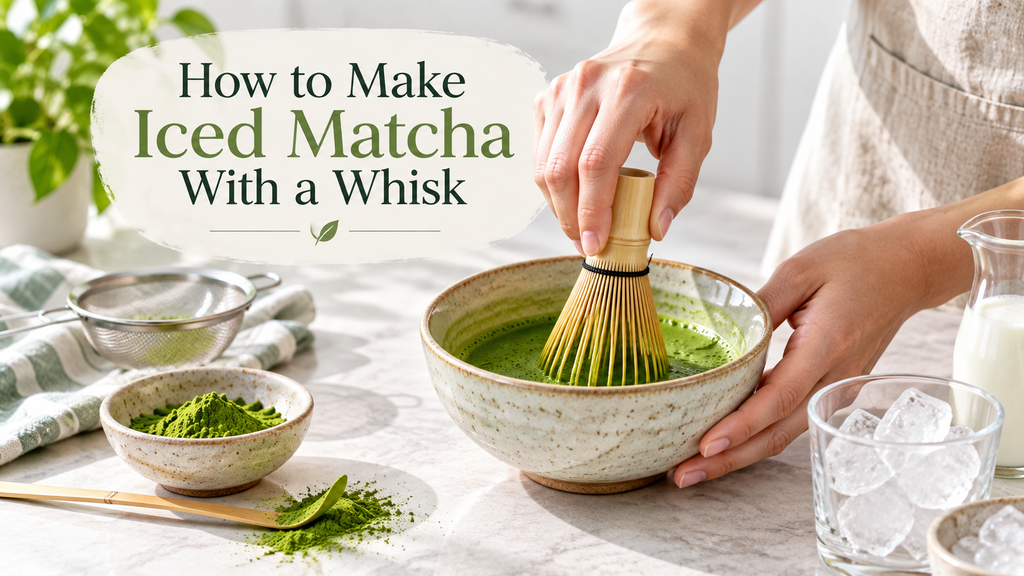
A bamboo whisk, or chasen, is useful when you want a smooth matcha base before adding ice.
1. Sift the matcha
Place 2 g matcha through a small fine-mesh strainer into a broad bowl.
Sifting is especially helpful if your matcha has visible lumps or has been open for a while.
2. Add a small amount of warm water
Add about 45 ml warm water.
For this everyday iced recipe, water around 75–80°C (167–176°F) is a practical starting point. It does not need to be exactly one temperature.
Avoid pouring vigorously boiling water directly onto the powder as your default method because very hot water can produce a harsher flavor.
3. Whisk briskly
Move the bamboo whisk rapidly back and forth or in a loose zig-zag motion.
Keep the motion light rather than grinding the whisk against the bottom of the bowl.
Stop when the matcha looks evenly dispersed and you cannot see dry clumps.
A large foam cap is optional.
4. Build the iced drink
Fill your glass with ice and add 180 ml cold water.
Pour in the matcha concentrate and stir gently.
Serve immediately.
How to Make Iced Matcha Without a Whisk

You do not need a bamboo whisk to make iced matcha.
A sealable jar, cocktail shaker or shaker bottle works particularly well.
Add 2 g sifted matcha and about 60 ml cold water to the container. Seal it tightly and shake vigorously for around 15–20 seconds.
Pour the mixture over ice, then add enough cold water to reach the strength you prefer.
The bubbles produced by shaking may look different from chasen-whisked foam, but that does not make the drink inferior.
How to Make Iced Matcha With a Milk Frother
A handheld frother is another convenient option.
Put the matcha and a small amount of water in a tall cup so you have enough space to avoid splashing.
Submerge the frother before turning it on and mix until the matcha is evenly dispersed.
Add the remaining cold water—or milk for a latte—and pour over ice.
Avoid using a very shallow container because the frother can send matcha over the counter.
Blender Method for Iced Matcha
A blender works well when you are preparing more than one serving or want a highly aerated latte.
Combine your matcha and liquid, then blend only long enough to disperse the powder.
Blenders incorporate a lot of air, so the texture will usually be foamier than whisked matcha.
For one small drink, a blender is usually more equipment than you need.
Ways to Make Iced Matcha
| Method | Equipment | Best For | Main Benefit |
|---|---|---|---|
| Bamboo whisk | Chasen and bowl | Smooth matcha base | Good control |
| Jar | Sealed jar | Beginners | Fast and inexpensive |
| Frother | Handheld frother | Lattes | Convenient foam |
| Blender | Blender | Multiple servings | Powerful mixing |
There is no requirement to buy every traditional matcha tool before you can enjoy the drink at home.
Do You Need to Sift Matcha?
Not always, but it helps.
Sifting breaks apart dry lumps before they meet water. It is particularly useful when the powder has compacted in the container, absorbed a little moisture or is being mixed into a concentrated base.
If you are using a powerful shaker or frother and your matcha mixes smoothly, skipping the sieve may still give you a good drink.
Think of sifting as useful insurance rather than an absolute rule.
Why Is My Iced Matcha Clumpy?
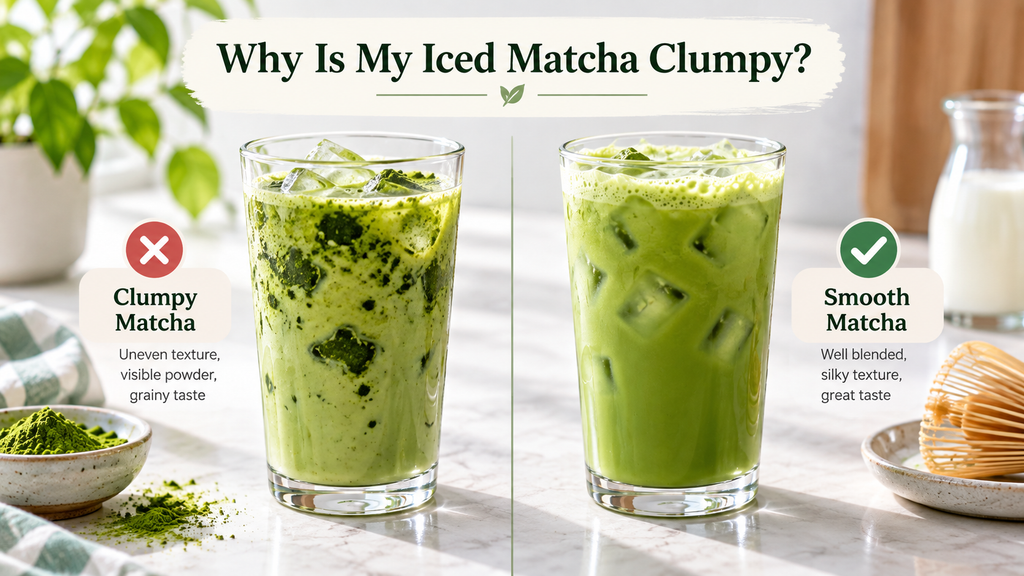
Clumpy matcha usually points to the preparation method rather than one single problem.
Common causes include:
- skipping the sifter when the powder is already lumpy
- adding dry powder directly to milk
- adding matcha directly over ice
- using too much matcha for a tiny amount of liquid
- insufficient whisking or shaking
- moisture getting into the matcha container
- powder that has lost freshness
The easiest fix is to sift the matcha and prepare a small smooth base before adding the rest of your drink.
Why Does Matcha Settle at the Bottom?
Some settling is normal because matcha is suspended powdered tea leaf.
If the drink sits for several minutes, give the glass a gentle swirl or stir.
You can also improve the suspension by sifting the powder, mixing more vigorously and drinking the matcha soon after making it.
Why Does My Iced Matcha Taste Bitter?
Bitterness can come from several places.
You may have used too much matcha, prepared it with hotter water than you enjoy, used very little total liquid or simply chosen a matcha with a more assertive flavor profile.
Try reducing the amount of matcha slightly, using somewhat cooler water or adding more cold water or milk.
Bitterness alone does not prove that a matcha is poor quality.
Why Is My Iced Matcha Gritty?
Large dry clumps, poor dispersion, moisture-damaged powder and extended settling can all create a gritty texture.
Sift first, mix the matcha in a small amount of water and serve the drink promptly.
What Kind of Matcha Should You Use?
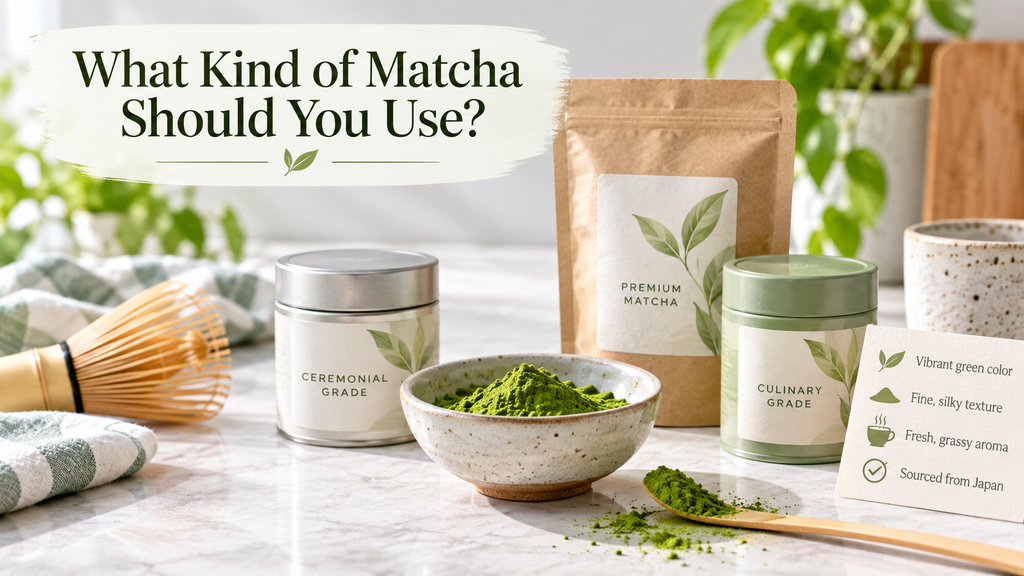
You will often see products described as “ceremonial,” “premium,” “latte” or “culinary” grade.
These labels can be useful clues about how a seller intends the product to be used, but they are not a universal regulated Japanese grading system.
Instead of shopping by one word on the package, consider:
- where the tea comes from
- the producer or seller
- intended use
- freshness
- aroma
- flavor
- packaging
- harvest information when available
Fresh-looking green color can be another useful signal, but color alone cannot prove quality. Cultivar, harvest, storage, processing and even lighting can affect appearance.
For iced matcha with only water, choose a tea you enjoy drinking relatively unmasked.
For a latte, a stronger-flavored matcha can work well because milk softens the tea flavor.
How to Make an Iced Matcha Latte
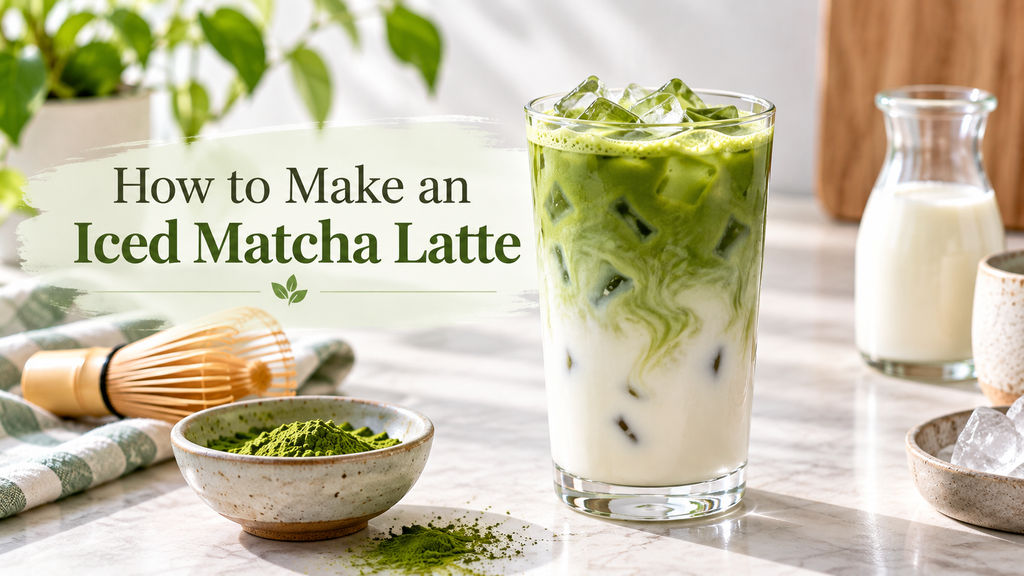
For one latte use:
- 2 g matcha
- 45 ml warm water
- 180 ml cold milk
- About 1 cup ice
- Sweetener to taste, optional
Sift the matcha and whisk it with the water until smooth.
Fill a glass with ice and add the milk.
Pour the matcha over the milk and stir.
You can leave the green layer floating over the milk for a photograph, but stirring before drinking gives you an even flavor.
What Milk Is Best for Iced Matcha?
There is no single best milk.
Dairy milk gives the drink a familiar creamy body.
Oat milk tends to create a creamy latte with a naturally mild sweetness. Barista versions may have a different texture from standard oat beverages.
Soy milk can provide a full texture and works well when you want the matcha flavor to remain noticeable.
Almond milk generally makes a lighter latte.
Coconut beverage gives a distinctive coconut note. Remember that carton coconut beverages are very different from thick canned coconut milk.
Choose according to the flavor and texture you enjoy rather than assuming one type is automatically healthier or better.
How to Sweeten Iced Matcha
Sweetener is optional.
Good options include:
- simple syrup
- maple syrup
- honey
- agave
- vanilla syrup
Liquid sweeteners are convenient because they mix easily into a cold drink.
If you prefer regular granulated sugar, stir it into the warm matcha concentrate before adding ice.
Vanilla Iced Matcha Latte
To make a vanilla version, add a small amount of vanilla extract or vanilla syrup to the latte.
If you use sweetened vanilla syrup, taste the drink before adding another sweetener.
How to Make Starbucks-Style Iced Matcha at Home
For a café-style drink inspired by Starbucks, use your smooth matcha base with cold milk, ice and simple or classic-style syrup.
Do not describe a homemade recipe as the “exact Starbucks recipe” unless you are working from a published official formula.
Starbucks’ current U.S. drink uses matcha, milk, ice and Classic Syrup, allowing the sweetness to be customized.
That makes a homemade matcha latte with separately controlled syrup a closer conceptual match to the current drink than older recipes based on presweetened matcha powder.
How to Keep Iced Matcha From Tasting Watery
Ice inevitably melts, so start with a concentrated matcha base rather than making the drink excessively watery before the ice goes in.
Also:
- use enough matcha for the size of the drink
- avoid excessive water
- add ice close to serving time
- serve promptly
- use larger ice cubes when convenient
Larger cubes still melt; they do not eliminate dilution entirely.
Can You Make Iced Matcha Ahead of Time?
You can prepare it ahead, but the powder will gradually settle.
Store plain prepared matcha sealed in the refrigerator and shake or stir it again before drinking.
For a milk-based drink, keep it properly refrigerated and follow the storage instructions for the milk or plant beverage you use.
Fresh preparation generally gives the best texture.
How to Store Matcha
Matcha is sensitive to its environment.
Keep it:
- tightly sealed
- protected from heat
- protected from moisture
- protected from light
- away from strong odors
Follow the manufacturer’s storage instructions.
If you refrigerate matcha, take care not to introduce condensation into the powder when opening the container.
Quick Iced Matcha Recipe Card
Prep time: 4 minutes
Total time: 4 minutes
Yield: 1 serving
Glass size: 12–14 oz
Ingredients
- 2 g matcha
- 45 ml warm water
- 180 ml cold water
- 1 cup ice
- Optional liquid sweetener
Equipment
- Fine-mesh strainer, optional but useful
- Bamboo whisk, regular whisk, frother or sealed jar
- Small bowl
- Serving glass
Instructions
- Sift the matcha into a small bowl.
- Add 45 ml warm water.
- Whisk briskly until evenly dispersed with no visible dry clumps.
- Fill a glass with ice.
- Add 180 ml cold water.
- Pour in the matcha base.
- Stir and serve promptly.
Latte Variation
Replace the 180 ml cold water with 180 ml cold milk.
No-Whisk Method
Shake 2 g matcha with approximately 60 ml cold water in a tightly sealed jar for 15–20 seconds, then add ice and the remaining water or milk.
Storage
Freshly made matcha has the best texture. Refrigerate any prepared drink promptly and stir or shake again before serving.
Frequently Asked Questions
Can you make matcha with cold water?
Yes. A sealed jar or shaker can disperse matcha effectively in cold water when shaken vigorously.
Do you need hot water for iced matcha?
No. Warm water makes it easier for many beginners to create a smooth concentrate, but cold preparation can also work.
How much matcha should I use?
About 2 g is a useful starting amount for one glass. Adjust according to your matcha and taste.
Why is my iced matcha clumpy?
The powder may need sifting, may have absorbed moisture or may not have received enough agitation. Avoid dumping dry matcha directly into milk.
Why does matcha settle?
Because it is powdered tea suspended in liquid rather than an instant powder that completely dissolves.
Do I need a bamboo whisk?
No. A sealed jar, milk frother or blender can also make iced matcha.
Can I use oat milk?
Yes. Oat milk is a popular option for a creamy iced matcha latte.
Is ceremonial-grade matcha required?
No. Grade terminology varies between sellers. Choose a matcha whose flavor, freshness, source and intended use suit your drink.
Can I make iced matcha ahead?
Yes, but settling is normal. Refrigerate it and shake or stir again before serving.